
How Many Calories in 2 Sunny Side Up Eggs? Your Breakfast Guide
Discover 2 sunny side up eggs calories with a simple nutrition breakdown and tips to track your breakfast effortlessly.
Posted by
 Munchlog
Related reading
how many calories are in boiled chicken breast | A Simple Guide
Find out how many calories are in boiled chicken breast and how it fits into a balanced diet. Get portion tips and nutrition insights.
Your Guide to Buttered Bread Calories
Curious about buttered bread calories? Learn what's in your favorite snack and discover how to track it without the stress, making mindfulness easy.
What are macros in food? A Quick, Friendly Guide
what are macros in food? Learn the basics of protein, carbs, and fats in clear terms; practical tips you can apply today.
Trying to figure out the calories in your breakfast shouldn't feel like a math test. For a classic plate of two large sunny-side-up eggs, you're usually looking at about 140 to 180 calories.
But that's just the starting point. The final number really comes down to what you cook them in. Let's break it down.
The Breakdown: Calories in Two Sunny Side Up Eggs
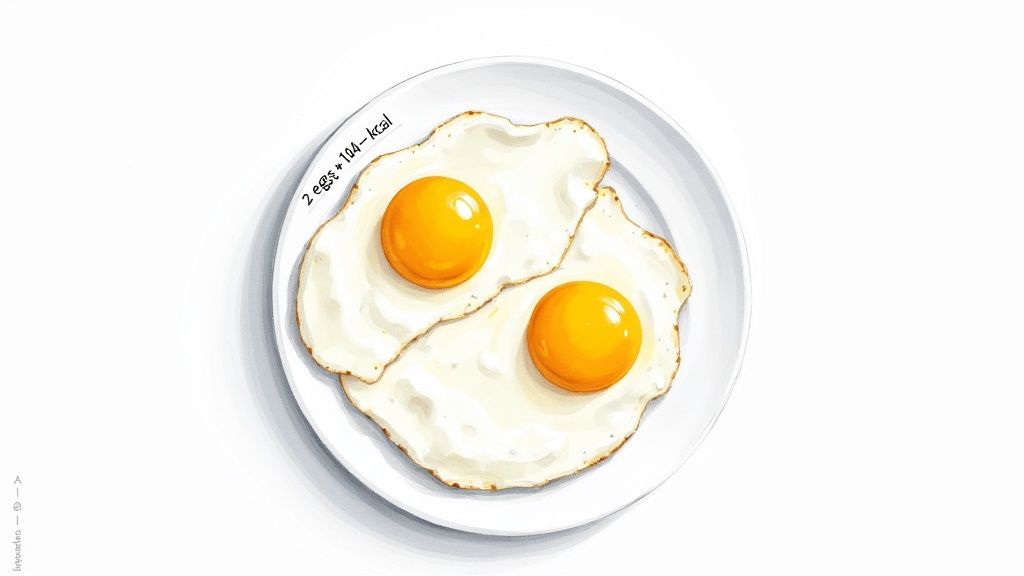
Eggs are a breakfast champion for a reason—they're packed with nutrients and keep you full. But the exact calorie count can change depending on their size and, more importantly, how much oil or butter you use for that perfect crispy edge.
If you could cook two large eggs without any fat at all, they'd be around 124 calories. They also deliver a solid punch of protein, selenium, and vitamin B12, which are great for your metabolism and energy.
Here’s a quick look at the average nutrition for two large sunny-side-up eggs cooked with a little bit of oil.
Quick Nutrition Glance for 2 Large Sunny Side Up Eggs
| Nutrient | Approximate Amount |
|---|---|
| Calories | 140-180 kcal |
| Protein | ~13 grams |
| Fat | ~10 grams |
| Carbs | ~1 gram |
This table gives you a great baseline. Just remember, the fat content will climb with every extra swirl of butter in the pan.
It's all about being aware, not obsessive. Knowing this helps you make smarter choices. If you're exploring different ways to prep them, you might find our breakdown on boiled eggs without the yolk useful, too.
And when you don't want to think about it at all? That's where a tool like munchlog.ai comes in. Just say what you ate, and we'll do the math for you.
What Are Those Calories Actually Made Of?
Calories get all the attention, but the real story is in the macronutrients—the protein, fat, and carbs that fuel your body. It's like checking out a car; the price is important, but you really want to know about the engine and features. It’s the same with your breakfast.
That’s where two sunny-side-up eggs really shine. They're a nutritional powerhouse because they’re packed with high-quality protein, which helps build muscle and keeps you feeling full. It's why an egg breakfast can stop that mid-morning snack attack in its tracks.
The Macro Breakdown
The magic of eggs is their balance. They’re a protein hero, but they also deliver healthy fats that are crucial for brain health. Here’s what’s inside:
- Protein: The star of the show, keeping you full and fueling your muscles.
- Fat: Mostly in the yolk, these fats are vital for hormone production and overall cell function.
- Carbohydrates: Eggs have almost no carbs, making them a great fit for any eating style.
Diving into the numbers, a typical serving of two large sunny-side-up eggs has about 143 calories. This breaks down into a powerful 13 grams of protein, 9.5 grams of healthy fats, and just 1 gram of carbs. You can explore a more detailed nutritional profile over at MyNetDiary.
Understanding this helps you see why eggs are more than just a number. If you want to learn more, we have a simple guide explaining what macronutrients are and why they matter. Logging with munchlog.ai makes tracking this stuff effortless; just say what you ate, and the app gives you the complete picture, no stress.
So, you're tracking your food and notice the calorie count for "two sunny-side-up eggs" seems to change. You're not imagining things. The final number can vary, and it all comes down to a few simple details.
Think of the eggs as your starting point. The two biggest factors that will change the final calorie count are the size of the eggs you're using and, more importantly, the amount and type of fat you add to the pan.
The Two Big Variables: Egg Size and Cooking Fat
First, let's talk eggs. A medium egg has about 63 calories, while a jumbo one can pack over 90. It might not seem like a huge jump, but it can add up.
The real game-changer, though, is the cooking fat. A quick spritz of cooking oil might add almost nothing, but a generous pat of butter or a glug of olive oil can easily tack on an extra 50 to 120 calories. This is where most of the calorie difference comes from.
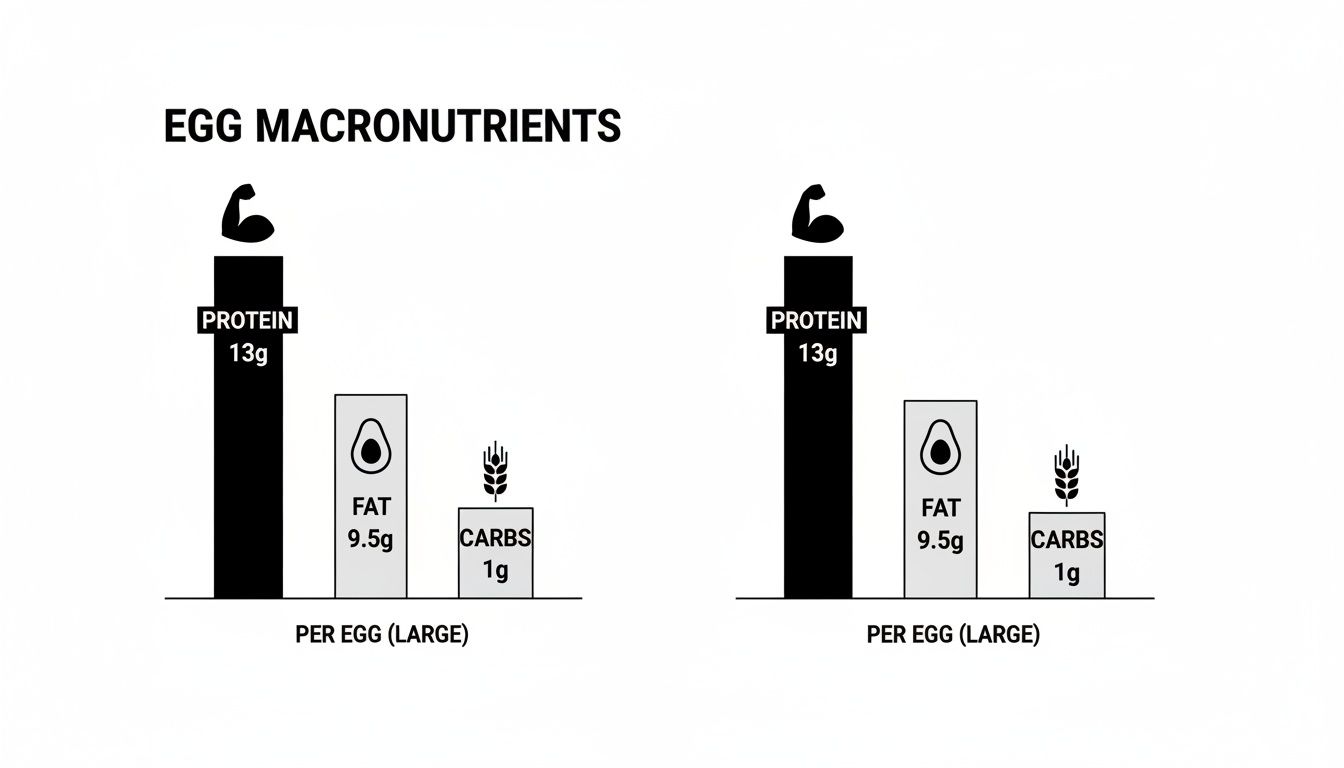
As you can see, eggs are mostly protein and fat, with very few carbs. If you're curious to learn more about one of these key parts, exploring the egg white protein benefits can give you a better idea of what you're fueling your body with.
How Your Cooking Fat Adds Calories
To give you a clearer picture, here’s a quick breakdown of how common cooking fats can change the final calorie count.
| Cooking Fat | Amount | Approximate Calories Added |
|---|---|---|
| Butter | 1 Teaspoon | ~35 calories |
| Butter | 1 Tablespoon | ~102 calories |
| Olive Oil | 1 Teaspoon | ~40 calories |
| Olive Oil | 1 Tablespoon | ~120 calories |
| Coconut Oil | 1 Tablespoon | ~120 calories |
| Cooking Spray | 1-second spray | ~5-10 calories |
As you can see, just switching from a tablespoon of oil to a teaspoon can save you around 80 calories. These small tweaks are what make being mindful of your food so powerful.
It's these little details that can make manual calorie counting feel like a chore. This is exactly what an app like munchlog.ai handles for you. You can just say, "I had two large sunny-side-up eggs cooked in a teaspoon of butter," and it calculates the total instantly. No guesswork needed.
Remember, tracking isn’t about being perfect. It's about building awareness. Understanding that your cooking oil adds calories gives you the power to make informed choices without obsessing.
Log Your Entire Breakfast in Seconds
You've just cooked those perfect sunny-side-up eggs, and now comes the part that can feel like a chore: logging your meal. Fiddling with your phone, searching for every ingredient, and manually entering details can really kill the vibe of a good breakfast.
It doesn’t have to be that complicated. With munchlog.ai, you can track your entire breakfast just by saying what you ate. No typing, no endless searching.
Just Say What You Ate
Picture this: you've finished your plate. Instead of tapping through a clunky app, you simply say, “I had two sunny side up eggs cooked in a teaspoon of butter with a slice of whole-wheat toast.”
And that’s it. Our AI instantly understands, breaks down each food, and logs the estimated calories and macros for your whole meal. This is where food tracking stops feeling like homework and starts feeling like a natural part of your day.
This easy process is what we're all about. We want to make nutritional awareness as simple as having a quick chat, helping you stay mindful without the stress of manual logging.
See how munchlog.ai visualizes your daily intake at a glance.
The app lays out your macros in a clean, straightforward way, so you get the full picture without getting lost in the numbers.
This voice-first approach means you capture the small but important details—like that teaspoon of butter—that make your tracking more accurate. You don’t have to settle for a generic "fried egg" entry. You get a log that reflects what you actually ate, giving you a much clearer understanding of your nutrition.
For busy people, finding an easy food tracking app that fits into their life is everything. It’s the difference between sticking with your goals and giving up after a few days.
Building a Better Breakfast Plate
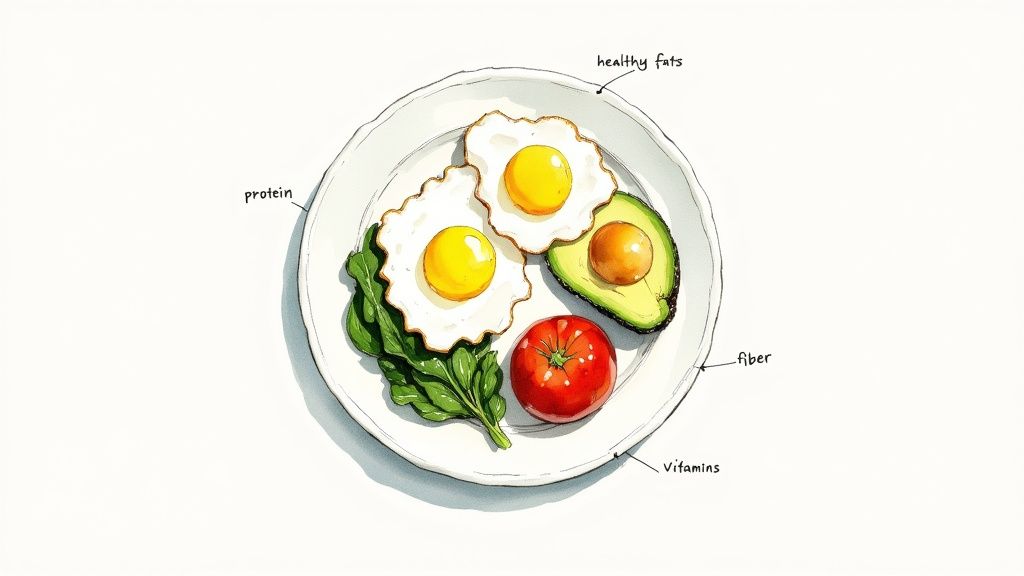
Two sunny-side-up eggs are a great start, but what you put around them transforms a simple meal into a powerhouse breakfast. Think of your eggs as the star and the sides as the supporting cast that makes the whole show amazing.
This isn't about complicated recipes. It's just about adding color, texture, and nutrients to your plate. Pairing your eggs with the right partners is a simple way to boost fiber, healthy fats, and vitamins without stressing out your morning.
Simple and Smart Pairings
Creating a balanced breakfast is easier than you think. Here are a few ideas to take your sunny-side-up eggs from good to great:
- Half an Avocado: Adding a few slices brings creamy texture, healthy fats, and a shot of fiber to help you feel satisfied for hours.
- Sautéed Spinach: A handful of spinach, wilted in the pan for a minute, is an effortless way to sneak in iron and vitamins A and K.
- Fresh Tomatoes: Whether sliced or cherry, tomatoes add a juicy burst of freshness and lycopene, a cool antioxidant.
And the best part? Logging a complete meal like this is super fast. Just tell munchlog.ai, “I had two sunny side up eggs with half an avocado and a side of spinach," and you’ll get the full nutritional breakdown in seconds.
This approach shifts the focus from just the 2 sunny side up eggs calories to the total nutritional value of your meal, helping you build satisfying breakfasts that actually fuel your day.
If you’re looking for more ways to switch up your morning routine, you can explore other healthy breakfast ideas. It’s a great reminder that a nutritious start can also be delicious and fun.
Answering Your Top Egg Questions
Eggs are a breakfast staple, but they come with a lot of questions. Let's tackle some of the most common ones you might have when you're cracking a couple into the pan.
What’s the Deal With Cholesterol in Egg Yolks?
For years, egg yolks got a bad rap because of cholesterol. We've learned a lot since then. Current science shows that for most healthy people, the cholesterol you eat doesn't really affect the cholesterol levels in your blood.
The truth is, those golden yolks are packed with nutrients like vitamin D and choline. So unless your doctor has told you otherwise, go ahead and enjoy the whole egg.
Are Sunny-Side-Up Eggs a Healthier Choice Than Scrambled?
When you look at just the egg, the nutrition is pretty much the same. The real difference comes from what you add to them.
Scrambled eggs often get a splash of milk or cream, which adds calories and fat. Sunny-side-up eggs just need a little fat to cook in. The gentle cooking of a sunny-side-up egg might also do a better job of preserving some of the nutrients in that delicious runny yolk.
The bottom line: The "healthiest" option is the one you enjoy and that fits into your day. A splash of milk or a pat of butter are small details that are easy to track and account for.
Do Brown Eggs Have More Calories Than White Eggs?
This is a classic kitchen myth! The color of an eggshell just depends on the breed of the chicken. It has zero impact on the egg's nutritional value.
A large brown egg and a large white egg have the same calories, protein, and fat. So, feel free to grab whichever you prefer—or whichever is on sale.
Ready to stop guessing and start knowing? With munchlog.ai, you can track your meals just by talking. It's the simplest way to stay mindful of your nutrition without the hassle. Get started at https://munchlog.ai.