
Are Chicken Wraps Healthy? Your Simple Guide
Are chicken wraps healthy? This guide breaks down the calories, protein, and carbs, showing you how to build a wrap that fits your health goals.
Posted by
 Munchlog
Related reading
Your Guide to Mixed Berries Nutrition
Explore our simple guide to mixed berries nutrition. Learn the calories, carbs, and benefits, and see how easy it is to log them for a healthier diet.
A Simple Guide to Skim Milk Nutrition
Discover the complete skim milk nutrition profile. We break down the calories, protein, and vitamins to help you track your intake effortlessly.
Egg White Scrambled Nutrition Facts
Discover egg white scrambled nutrition facts, from calories and protein to how they compare with whole eggs. Your easy guide to a healthy breakfast.
So, you're grabbing a chicken wrap for lunch and wondering, "Is this actually a healthy choice?"
Great question. The short answer is: it totally depends on what's inside. A chicken wrap isn't automatically "good" or "bad"—think of it as a blank canvas. You're the artist, and the ingredients you choose determine whether it's a light, energizing meal or a calorie-heavy bomb.
The Real Deal on Chicken Wrap Nutrition
Building a chicken wrap is a lot like building a playlist. Every ingredient you add sets a different vibe. You have complete control over whether you're creating a lean, mean, nutritional machine or something that'll make you want to take a nap an hour later.
The details matter. A wrap packed with grilled chicken, a mountain of fresh spinach, crunchy bell peppers, and a splash of salsa is going to feel totally different than one stuffed with crispy fried chicken, bacon, cheese, and a heavy pour of ranch dressing. One helps you hit your goals; the other... well, it's a different kind of vibe.
A Look at the Numbers
So what does a "typical" chicken wrap look like nutritionally? A reasonably balanced, 200-gram wrap often lands somewhere around 350 calories, 25 grams of protein, 12 grams of fat, and 35 grams of carbohydrates. That protein count is great, knocking out a big chunk of your daily needs in one go. For a deeper dive, you can check out a more detailed nutritional breakdown of chicken wraps.
This is where casual tracking comes in handy. Instead of getting lost in spreadsheets, you can just tell an app like munchlog.ai, "I had a chicken wrap with grilled chicken, lettuce, tomato, and a little ranch." You get instant, simple feedback. It takes the guesswork out of the equation and shows you how that meal fits into your day, no stress involved.
The big idea here is that a little awareness changes everything. When you know what’s going into your wrap, it stops being a nutritional mystery and becomes a reliable meal you can feel good about.
Let's break it down piece by piece.
Quick Glance: Chicken Wrap Health Score
This table is your cheat sheet for building a better wrap, showing where you get the most bang for your buck, nutritionally.
| Component | Healthier Choice | Less Healthy Choice |
|---|---|---|
| The Wrap | Whole wheat, spinach, or low-carb tortilla | Large white flour or cheese-infused tortilla |
| The Protein | Grilled, baked, or shredded chicken breast | Crispy/fried chicken, processed chicken deli meat |
| The Veggies | Leafy greens, bell peppers, tomatoes, onions | Minimal or no vegetables |
| The "Extras" | Avocado, hummus, black beans | Bacon, croutons, crispy onion strings |
| The Sauce | Vinaigrette, salsa, yogurt-based dressing | Ranch, Caesar, mayonnaise, creamy sauces |
| The Cheese | A small amount of feta or provolone | Heaps of cheddar, cheese sauce |
As you can see, a few simple swaps can completely transform your wrap from something heavy and calorie-dense to a light, protein-packed powerhouse.
Breaking Down Your Chicken Wrap, Ingredient by Ingredient
Ever stop to think about what's actually going on inside that chicken wrap you grab for lunch? Let's peel back the tortilla. A wrap is just a collection of ingredients, and seeing how each part adds up isn't about being restrictive; it's just about being mindful.
This quick breakdown shows how easily a wrap can go from a genuinely healthy meal to something... not so much.
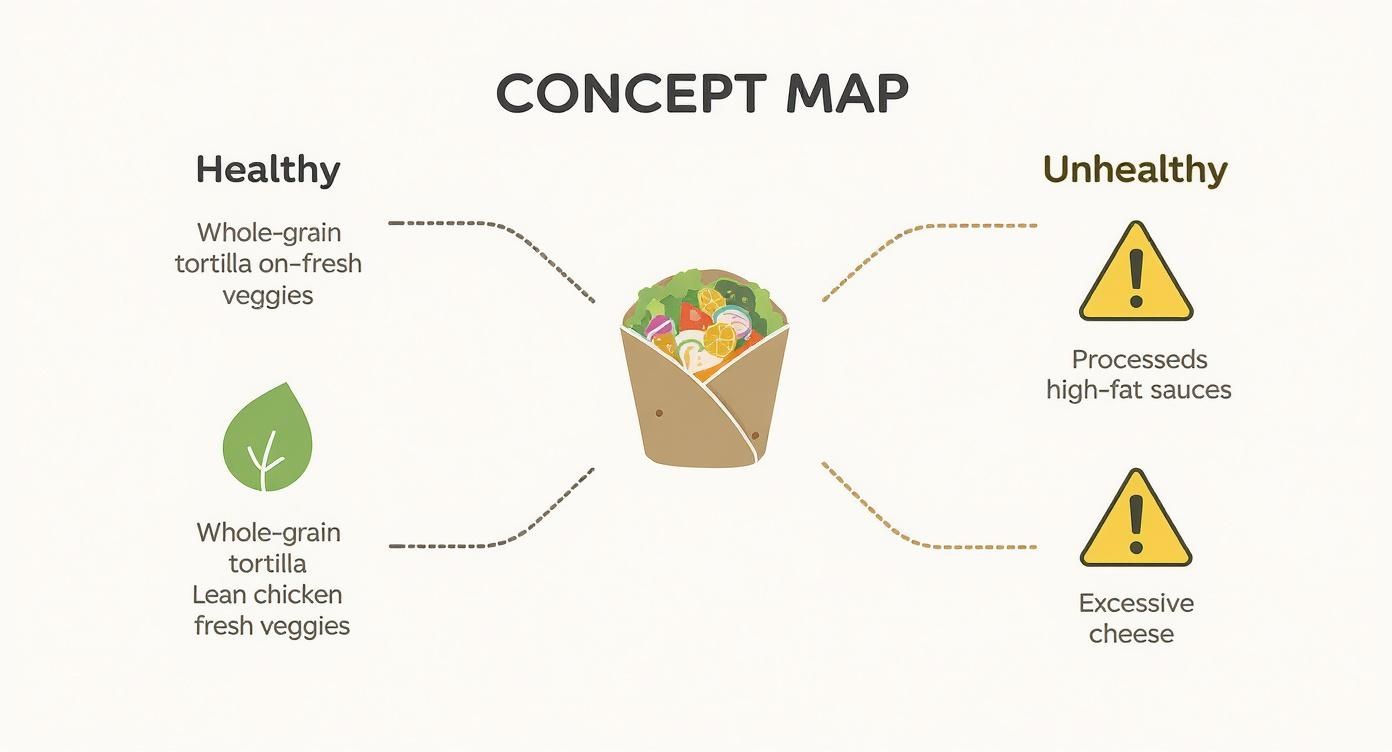
The road to a healthier wrap is paved with lean protein and fresh veggies, while the less-healthy route is loaded with fried stuff and heavy, creamy sauces.
The Foundation: The Tortilla
The wrap itself is your starting point, and it sets the nutritional tone. A big, fluffy, white flour tortilla can pack a surprising amount of calories and refined carbs—often similar to two slices of white bread. It’ll give you a quick burst of energy, but it might not keep you feeling full for very long.
On the other hand, choosing a whole-wheat or spinach tortilla is a simple upgrade. These options usually have more fiber, which is great for digestion and helps you stay satisfied much longer. It might seem like a small detail, but these little swaps really add up.
The Star Player: The Chicken
Next up is the protein, and this is where you can make a huge difference. Grilled, baked, or shredded chicken breast will always be your leanest bet. It delivers a solid dose of high-quality protein with very little fat, making it perfect for feeling full and supporting your muscles. If you're curious about simple cooking methods, our guide on why boiled chicken is a healthy choice has some great tips.
Crispy or fried chicken, however, is a different ballgame. The breading and deep-frying process pack in a lot of extra fat and calories. It's delicious, for sure, but it turns a lean protein into a much heavier meal.
Think of it this way: picking grilled chicken over fried is like taking the scenic route instead of sitting in traffic. Both get you there, but one path just feels a little better.
The Supporting Cast: Fillings and Toppings
Finally, let's talk about everything else you stuff in there. This is your chance to either load up on nutrients or, just as easily, pile on hundreds of hidden calories.
- Vibrant Veggies: Packing your wrap with spinach, bell peppers, onions, and tomatoes adds vitamins, minerals, and fiber for almost no extra calories. More veggies also mean more volume, which helps you feel physically full.
- Calorie-Dense Extras: This is where things can get tricky. Cheese, bacon, and creamy sauces like ranch or Caesar are where calories love to hide. Just one serving of ranch dressing can add over 100 calories and 14 grams of fat.
This doesn't mean these ingredients are off-limits, but it helps to be mindful of how much you're using. This is where a simple tool like a food logger shines. You can just tell an app, “I had a wrap with crispy chicken, cheese, and ranch,” and get an instant, no-judgment look at your meal. It shifts you from guessing to knowing, which helps you build a better wrap next time.
Navigating Sauces and Hidden Calorie Traps
You’ve done everything right—you picked lean grilled chicken, piled on the fresh veggies, and used a whole-wheat tortilla. But that final drizzle of sauce? That's where a healthy meal can take a sharp turn. Sauces are the ultimate stealth ingredient, adding a huge burst of flavor while sometimes sneaking in a surprising amount of sugar, fat, and calories.
A little bit of creamy Caesar or a swirl of sweet chili sauce seems innocent, but it can easily add an extra 100-200 calories. It's the classic hidden calorie trap. The point isn't to make sauces the enemy, but just to be aware of how they can quietly add up.
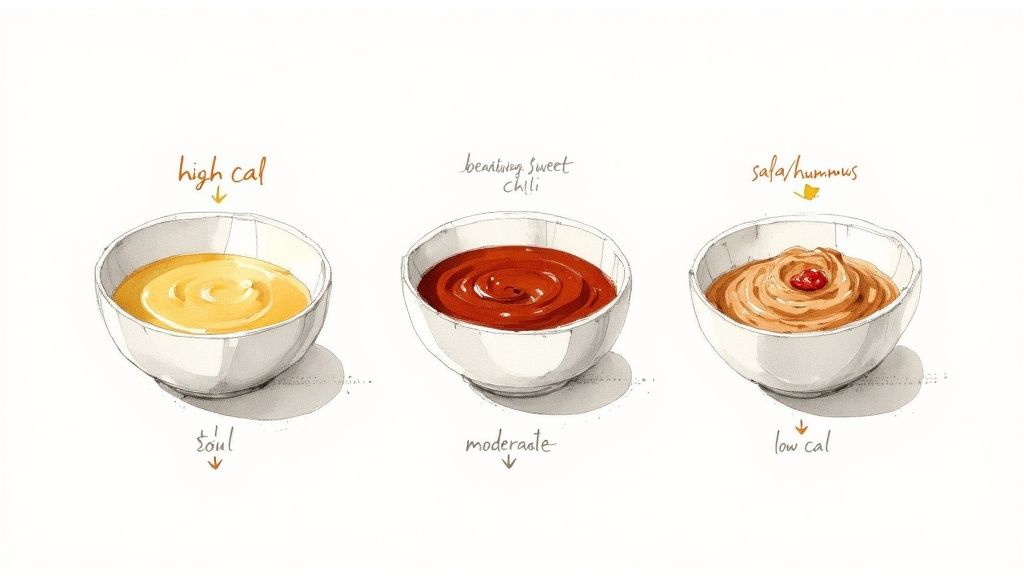
This is exactly why asking "are chicken wraps healthy?" has no simple answer. A basic grilled chicken wrap from one spot might be a lean 290 calories, but head to another restaurant, and their version loaded with creamy sauce and cheese can easily top 900 calories. The additions change everything.
The Saucy Truth About Your Wrap
Let's be honest, a dry wrap is a sad wrap. Flavor is essential, but how you add that flavor makes a world of difference. Many popular dressings—ranch, Caesar, spicy mayo—are mayonnaise-based, which means they're heavy on fat and calories. The sweet ones, like teriyaki or honey mustard, often have a surprising amount of added sugar.
These ingredients aren't "bad," they're just calorie-dense. They pack a lot of energy into a small serving without offering much protein or fiber to help you feel full.
The goal isn't to eat bland food. It's about being a "flavor strategist"—choosing sauces that deliver a big punch without the heavy nutritional baggage.
Smart Swaps for Maximum Flavor
Making a healthier choice doesn't mean sacrificing taste. It's all about smart substitutions. Instead of grabbing the creamy or sugary stuff out of habit, give these lighter, more vibrant options a try.
- Instead of Ranch or Caesar: Try a spoonful of Greek yogurt mixed with fresh herbs, a smear of hummus, or a light vinaigrette. You'll get that creamy, tangy fix for a fraction of the calories.
- Instead of Sweet Chili or BBQ Sauce: Go for fresh salsa or pico de gallo. They deliver a zesty, bright kick without all the added sugar. A squeeze of lime and a dash of hot sauce also works wonders.
- Instead of Mayonnaise: Mashed avocado is your best friend. It gives you that rich, creamy texture you're looking for, plus healthy fats and fiber to keep you full longer.
These simple swaps can easily shave a hundred calories or more off your meal. It's also super helpful to see the real impact of these choices. For a deeper dive into macros, check out our guide on how to count carbs in your meals. Making informed choices is a lot easier when you understand what's in your food.
How to Build a Wrap for Your Specific Goals
One of the best things about a chicken wrap is how easily you can customize it. It really is a blank canvas. Whether you're trying to build muscle, manage your weight, or just power through a long afternoon, you can build a wrap that works for you.
The trick is knowing which ingredients to lean into. Let’s break down how to build the perfect wrap for a few common goals.
The Protein Powerhouse for Muscle Building
If you’re hitting the gym and looking to build muscle or recover faster, protein is your best friend. A high-protein wrap is exactly what your body needs to repair and grow. It also keeps you feeling full, which helps you stay on track with your goals.
The game plan here is to maximize lean protein while keeping the other ingredients clean and simple.
- Wrap: A whole-wheat tortilla is a solid base.
- Protein: Be generous with the grilled chicken breast and toss in a scoop of black beans for an extra kick of plant-based protein and fiber.
- Fillings: Load it up with nutrient-dense greens like spinach and some colorful bell peppers for crunch.
- Sauce: A Greek yogurt-based sauce adds creaminess and another hit of protein.
You can tell your munchlog.ai app, "I had a large whole-wheat wrap with grilled chicken, black beans, spinach, and Greek yogurt sauce." It’ll instantly log a high-protein meal, making it easy to see if you’re hitting your targets. For more on this, check out our guide on how to calculate your daily protein needs.
The Light and Lean Wrap for Weight Management
When weight management is the goal, you want a wrap that’s high in volume but low in calories. Think big and satisfying, but without feeling heavy. This means packing it with ingredients that fill you up without weighing you down.
Here, the focus is squarely on fiber from veggies and lean protein.
- Wrap: A low-carb or spinach tortilla is your go-to.
- Protein: A standard portion of grilled chicken is perfect.
- Fillings: Go all-in on the vegetables. Lettuce, cucumber, tomatoes, and onions add fantastic crunch and volume for almost no calories.
- Sauce: Fresh salsa or a light vinaigrette brings a ton of flavor without adding fat or sugar.
The Energizer for Sustained Fuel
Ever get that 3 p.m. slump? A wrap built for sustained energy can help. The right mix of complex carbs, protein, and healthy fats provides a slow-releasing fuel source that keeps you focused and productive for hours.
Building a wrap for energy means choosing ingredients that your body digests more slowly, providing a steady stream of fuel instead of a quick spike and crash.
This approach ensures your meal works for you long after you've finished eating.
- Wrap: A whole-grain or even a quinoa-based tortilla is ideal.
- Protein: Grilled chicken remains a great, lean choice.
- Fillings: Add a healthy fat source like sliced avocado, and maybe some chickpeas for extra fiber and complex carbs.
- Sauce: A smear of hummus adds delicious flavor, healthy fats, and a bit more fiber to the mix.
To help you visualize how these small changes add up, here’s a quick comparison.
Build Your Wrap Based on Your Goal
This table gives you a snapshot of how ingredient choices can drastically change your wrap to match your goals.
| Goal | Wrap Build Example | Estimated Protein | Estimated Calories |
|---|---|---|---|
| Muscle Building | Whole-wheat wrap, double grilled chicken, black beans, spinach, Greek yogurt sauce | 50g | 550-650 |
| Weight Management | Low-carb wrap, standard grilled chicken, lettuce, tomato, cucumber, salsa | 30g | 350-450 |
| Sustained Energy | Whole-grain wrap, grilled chicken, avocado, chickpeas, hummus | 35g | 500-600 |
As you can see, a few simple swaps can make a huge difference.
Making sure your wrap aligns with your broader plan is key. To really dial things in, you might find it helpful to learn more about tracking macronutrients for your ideal body composition. At the end of the day, no matter your goal, a well-built wrap can definitely help you get there.
Simple Swaps for a Smarter, Healthier Wrap
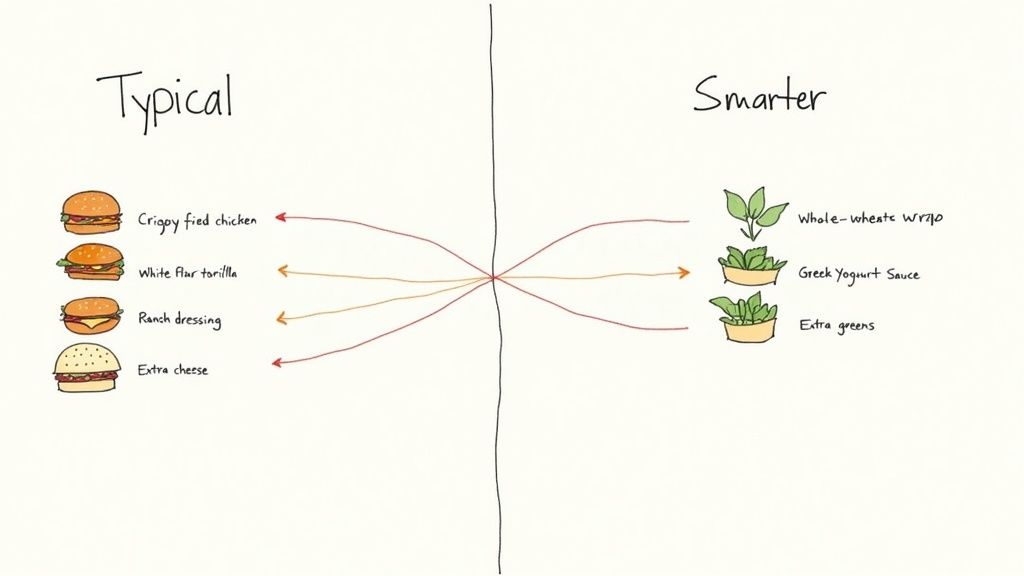
Knowing what goes into a healthy chicken wrap is one thing, but putting it into practice is where the magic happens. The good news is that a few smart, simple swaps can completely transform your wrap, whether you're ordering out or making one at home.
This isn't about restriction or eating boring food. It’s about making small upgrades that deliver big nutritional benefits without sacrificing the flavors you love. Think of these tips as your toolkit for building a better wrap, every single time.
Choose Your Protein Wisely
The single most impactful change you can make involves the chicken. Switching from crispy, fried chicken to a leaner alternative like grilled, baked, or shredded chicken breast is a game-changer. This one move can easily save you over 200 calories and more than 15 grams of fat.
Why does this work so well? The breading and frying process soaks up a ton of oil, adding empty calories. Lean protein, on the other hand, is what you want—it keeps you feeling full for hours and supports your body, making it a much more efficient fuel.
Upgrade Your Base
The tortilla is the foundation of your wrap, so don't overlook it! Trading a standard large white flour tortilla for a whole-wheat or spinach version is an easy win. You'll instantly add a few extra grams of fiber, which is great for your digestion and helps you feel satisfied long after you've finished eating.
A simple switch to a whole-grain tortilla not only adds valuable nutrients but also helps prevent that quick energy crash that can come from refined carbs. It's a small change for more stable energy throughout your day.
Load Up on Color
Here’s a great rule of thumb: the more colorful your wrap, the better it is for you. Instead of reaching for extra cheese or bacon, pile on vibrant vegetables. Think crisp bell peppers, sharp red onions, and dark leafy greens like spinach or arugula.
Veggies add incredible volume, texture, and tons of vitamins for almost zero extra calories. This helps you feel fuller with less, making your wrap both more satisfying and nutrient-dense. For an extra crunch and a nutrient boost, you can even grow your own fresh sprouts to toss in.
Get Smart with Sauces
Those creamy, decadent dressings are often where hidden calories are lurking. A thick sauce can quickly turn a healthy meal into a calorie bomb. Fortunately, swapping it for a lighter, more flavorful alternative is easy and makes a massive difference.
- Instead of Ranch: Try Greek yogurt mixed with fresh herbs, a generous smear of hummus, or some zesty salsa.
- Instead of Mayo: Use mashed avocado. It delivers that perfect creaminess along with healthy fats and fiber.
These quick changes give you all the moisture and flavor you need without the heavy calorie count. Give one a try and see for yourself how much better you can make your next wrap.
So, Can You Enjoy Wraps Guilt-Free?
Absolutely. The big takeaway here is that chicken wraps aren't "good" or "bad." Their health score is decided by you, in your kitchen or at the deli counter. It's all about making mindful choices, not stressing over every last calorie.
A delicious, satisfying wrap can easily fit into a healthy lifestyle. The key is simply being aware of what you’re putting inside. When you know what goes into it, that wrap transforms from a mystery into a smart meal you can feel good about. You’re in the driver's seat.
The goal is awareness, not obsession. You don't have to build the "perfect" meal every single time. Real, sustainable progress comes from making small, informed tweaks that add up over time.
This is where a simpler approach to food tracking can be a game-changer. Instead of tedious manual entry, a tool like munchlog.ai lets you just say what you ate. Describing your meal—"a whole-wheat wrap with grilled chicken, avocado, and salsa"—gives you an instant breakdown of your calories and macros.
This kind of effortless voice logging helps you understand your food choices without the headache. It’s all about finding that balance between enjoying your life and eating well, and a thoughtfully built chicken wrap can absolutely be part of that picture.
Got Questions About Chicken Wraps?
Still wondering how chicken wraps can fit into your eating plan? Let's tackle some of the most common questions.
So, Are Chicken Wraps Actually Good for Weight Loss?
They definitely can be, but it all comes down to how you build them. The trick is to make lean protein and fiber the main event. Think grilled chicken and a mountain of fresh veggies. This combo is a powerhouse for keeping you full and satisfied, which is half the battle when you're managing your weight.
Where things can go sideways is with the dressings and the wrap itself. If you're mindful—choosing a lighter option like salsa over a creamy sauce, and picking a whole-wheat tortilla—you'll have a fantastic, low-calorie meal that supports your goals.
What's the Calorie Count on a Typical Chicken Caesar Wrap?
This one often catches people by surprise. A standard chicken Caesar wrap from a restaurant can easily pack anywhere from 500 to over 800 calories. It's not the chicken's fault! The main calorie drivers are the oversized flour tortilla, a heavy hand with the parmesan cheese, and that rich, creamy Caesar dressing.
The good news is you can slash those numbers at home. A simple swap to grilled chicken, a clever Greek yogurt-based Caesar dressing, and a smaller whole-wheat wrap can create a delicious version for a fraction of the calories.
Is a Chicken Wrap a Healthier Choice Than a Sandwich?
This is a classic "it depends" situation. Neither one is automatically healthier than the other; it’s all about what's inside. Sometimes, a huge, dense flour tortilla can have more calories and refined carbs than two slices of whole-grain bread.
You have to look at the whole package: the bread or tortilla, the protein, the fillings, and the sauces. The only way to know for sure is to compare them. A quick check-in with a food tracker is perfect for this—it takes the guesswork out and shows you the real numbers.
Ready to stop guessing and start knowing what's in your food? With munchlog.ai, you can track your meals just by talking. No typing, no photos, just your voice. Get instant insights into your calories and macros and make mindful eating feel effortless. Start your journey to smarter, simpler food tracking at https://munchlog.ai today.