
Searching for a Better App Than MyFitnessPal?
Tired of manual food logging? Discover if a modern voice-powered tracker is a better app than MyFitnessPal for casual, stress-free nutrition tracking.
Posted by
 Munchlog
Related reading
The food memory score: how reliable is your recall at the end of the day?
Use a simple food-memory score to see where your meal recall breaks down. A gentle rubric with real examples and low-pressure prompts to build usable memory of eating.
Why most food diaries fail after the first week (and what actually helps them stick)
Most food diaries die quick. This post unpacks the real reasons—friction, shame, memory gaps—and shows how voice-first, low-pressure check-ins help you notice patterns without quitting.
A kinder checklist for noticing food patterns without shame
A practical, non-shaming checklist to notice food patterns—what to observe, how to note it calmly, and simple examples to build lasting food awareness.
If you're looking for a better app than MyFitnessPal, your search probably boils down to a single word: easier. MyFitnessPal is a powerhouse for detailed tracking, but let's be honest—the constant manual logging can feel like a part-time job. The best alternative for you depends on your lifestyle, your goals, and how much time you're willing to spend logging every last bite.
Why People Look for a MyFitnessPal Alternative
For a long time, MyFitnessPal was the king of nutrition tracking. It’s helped millions of people understand their eating habits, and it deserves props for that. But if you’re here, you’ve probably felt the friction of its super-detailed approach. It’s a common story, so you're in good company.
The daily ritual of hunting down barcodes, manually entering every ingredient for your homemade salad, and guessing the portion size of your morning coffee can quickly turn a good habit into a grind. This is the main reason people start hunting for a better app than MyFitnessPal—they want the insights without the hassle.

The Burden of Manual Logging
The real problem with traditional tracking apps is the mental load. Every meal turns into a mini-project. Think about all the little steps:
- Searching and Scrolling: You’re constantly looking up every single item, from that splash of milk in your tea to the handful of almonds you grabbed on your way out the door.
- Barcode Battles: Sure, scanning is great for a protein bar. But it’s useless for fresh apples, that amazing dish you had at a local restaurant, or your mom's signature spaghetti.
- Estimation Overload: Trying to accurately guess portion sizes is both stressful and often inaccurate. Was that one tablespoon of olive oil or two? Who really knows?
This constant need for precision often leads to what many call "tracking fatigue." Instead of feeling in control, you just end up feeling burnt out. For people with simple goals, like finding effective high protein snacks for weight loss, a more streamlined app makes all the difference.
The search for an alternative isn't about giving up on tracking. It's about finding a method that actually fits into your life, instead of forcing your life to revolve around a rigid tracking process.
Questionable Database Accuracy
Another huge source of frustration comes from the app's massive food database. As of 2025, MyFitnessPal holds the top spot among calorie counters, with a library of over 18 million meals. The catch? A huge chunk of that data is user-submitted and unverified.
This crowdsourced approach means you can run into major inaccuracies that throw off your numbers and undermine your hard work. You can dig deeper into the challenges of user-generated nutrition data on techpoint.africa if you're curious.
In the end, the goal is to be mindful of what you're eating, not to take on a second job as a data entry clerk. Wanting a simpler way to track nutrition isn't lazy—it’s just practical for a busy life.
Introducing AI and Voice-Powered Food Logging
If you're hunting for something better than MyFitnessPal, you've probably noticed that the biggest leap forward isn't just a new interface—it's artificial intelligence. Modern apps are moving away from treating food logging like a chore and turning it into a simple conversation. This single shift is the antidote to the tracking burnout so many of us have felt.
Think about a typical chaotic morning. Instead of fumbling with your phone to type, scan, and confirm every item, you just say, "I had a coffee with a splash of oat milk and a banana for breakfast." That's it. The AI does the rest.
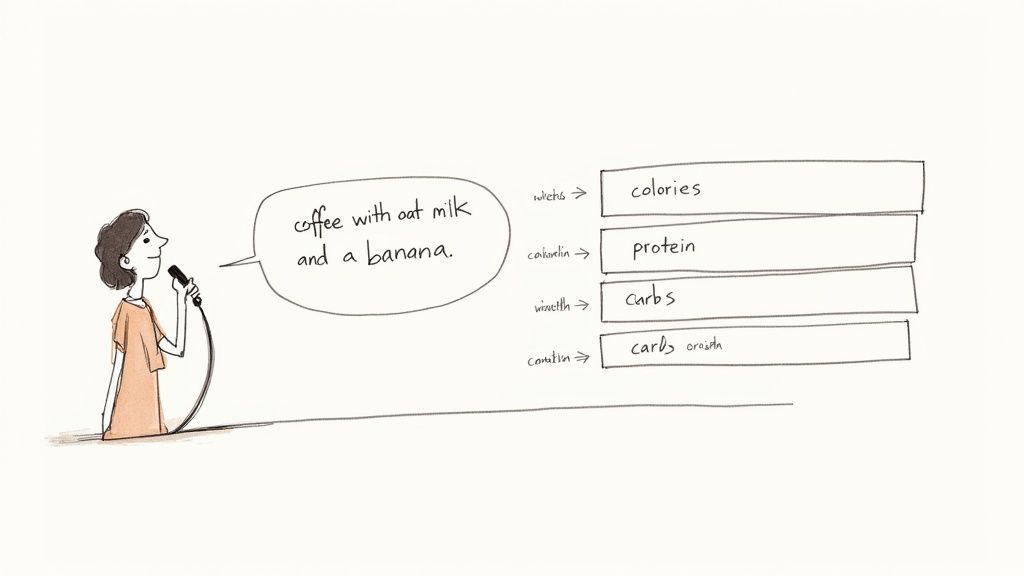
This isn't just a cool feature; it directly solves the friction that makes manual tracking so tedious. By removing the tiny, annoying steps that cause people to give up, logging becomes a quick, effortless habit instead of a dreaded task.
How Voice and AI Remove the Hassle
The magic behind AI-powered logging is its ability to understand natural language. You don't have to think like a food database anymore. You just describe your meal like you would to a friend, and the tech handles the translation.
This approach is a lifesaver for meals that are notoriously frustrating to log in traditional apps.
- Homemade Meals: Instead of adding every single ingredient for your soup, you can just say, "For lunch, I had a bowl of homemade turkey chili with a dollop of sour cream."
- Restaurant Dishes: No barcode to scan? No problem. Just describe what you ate: "I had the grilled salmon with roasted asparagus and a side of quinoa."
- Quick Snacks and Drinks: Even the small stuff gets captured easily. "Grabbed a handful of almonds and a black coffee."
By turning logging into a simple voice command, these apps make consistency feel genuinely achievable, especially for busy people. The focus shifts from obsessive data entry to simply building a mindful awareness of what you're eating. If you're looking for that kind of ease, exploring a simple food diary app can show you just how much easier tracking can get.
Voice-powered AI reframes food tracking from a rigid, time-consuming task into a fluid, two-second conversation. It’s designed for real life, not for a perfect world where every food comes with a barcode.
Making Nutrition Tracking More Approachable
This conversational method makes nutrition accessible to everyone, not just die-hard fitness enthusiasts. It’s perfect for the student grabbing a bite between classes, the busy parent whipping up a family dinner, or the professional who just wants to check their protein intake without getting bogged down in details.
The AI provides solid estimates for calories and macros, giving you a clear picture of your day without demanding absolute precision. This "good enough" approach to data is often far more sustainable than chasing a level of detail that’s impossible to maintain. In the end, this technology helps you build a healthier, more intuitive relationship with food—which is really what tracking should be about in the first place.
Comparing MyFitnessPal vs. Modern AI Trackers
So, how does the old guard stack up against the new wave of AI trackers? When you're looking for a better app than MyFitnessPal, the comparison isn't just about features—it's about the entire experience. This is a choice between two completely different philosophies on how to stay mindful of your nutrition.
Let's dig into how traditional manual logging compares to modern, voice-powered AI in the moments that matter in your day-to-day life.
The Logging Experience: Manual vs. Conversational
The core difference is how you get your food data into the app. With MyFitnessPal, you're the data entry clerk. You search, scan, and scroll through long lists of often confusing user-generated entries just to find the right one.
A modern AI tracker, like Munchlog.ai, completely flips the script. You're no longer hunting for data; you're just having a quick conversation.
Let's walk through logging a simple homemade lunch:
MyFitnessPal: You'd open the app and start the multi-step process. First, add "chicken breast," search for the correct database entry, and estimate the portion. Then, repeat for "quinoa," guessing the amount. You’d do this again for olive oil, spinach, and feta cheese. The whole thing could easily take 3-5 minutes of focused tapping and searching.
An AI Tracker: You’d just say, "I had a chicken and quinoa salad with spinach, feta, and a little olive oil." The AI instantly understands this, estimates the macros for the whole meal, and logs it. The entire interaction takes maybe 10 seconds.
This isn't just about saving a few minutes. It's about removing the exact friction that makes most people quit logging in the first place.
Time Commitment: Minutes vs. Seconds
When you add up all those little logging sessions, the time commitment becomes a huge factor. The time spent on a traditional tracker can add up surprisingly fast throughout the day. A quick coffee, a snack, lunch, dinner—each one is a small administrative task.
For busy people, this is often the breaking point. Those minutes spent with your head buried in a food database are minutes you could be spending on work, with your family, or just relaxing.
A voice-first approach respects your time. It’s built to fit seamlessly into the small gaps in your day. Logging becomes a quick background action that doesn't pull you out of your flow. This is a critical difference if you're trying to find an app that actually supports a busy lifestyle, not one that just adds another item to your to-do list.
The core philosophy of MyFitnessPal is meticulous data entry. The philosophy of a modern AI tracker is effortless data capture. One asks you to work for the data; the other makes the data work for you.
To see this in action, here's a side-by-side look at how traditional manual logging stacks up against AI-powered voice tracking for everyday use.
Feature Showdown: MyFitnessPal vs. a Modern AI Tracker
| Feature | MyFitnessPal (Traditional App) | Munchlog.ai (AI & Voice App) |
|---|---|---|
| Logging Speed | 2-5 minutes per meal. Involves searching, scanning, and manual entry. | Under 15 seconds per meal. Just speak what you ate. |
| Effort Level | High. Requires focus and can feel like a chore, interrupting your day. | Extremely Low. A quick, conversational check-in that feels effortless. |
| Accuracy | High Potential. Can be very precise if you weigh food and verify every entry. | High-Quality Estimates. AI provides reliable macro data for common foods. |
| Consistency | Difficult to maintain. The high friction often leads to skipped meals or quitting. | Easy to maintain. The low effort makes daily tracking sustainable long-term. |
| Mental Load | High. Constantly questioning portion sizes and database accuracy. | Low. Frees you from the stress of perfectionism; focuses on awareness. |
| Best For | Competitive athletes, users with strict medical needs, people who enjoy data entry. | Busy professionals, parents, and anyone who wants consistency without the hassle. |
Ultimately, the best tool is the one you'll actually use consistently. The table above highlights the fundamental shift from a high-effort, high-precision model to a low-effort, high-consistency one.
Accuracy vs. Effort: A New Balance
MyFitnessPal's strength has always been its massive, verified database (though it's mixed with a lot of user entries). For those who need clinical precision—like a competitive bodybuilder or someone with specific medical conditions—this level of detail can be essential. But that precision comes at the cost of significant effort.
AI trackers propose a different trade-off: excellent estimates for minimal effort.
Instead of demanding perfection, an AI provides a reliable, directional understanding of your macros. It knows what's in a typical bowl of chili or a standard latte. For the average person who just wants to make sure they're getting enough protein and not overdoing it on carbs, this level of accuracy is more than enough. It delivers 80% of the insight for 20% of the effort.
This approach redefines what "successful" tracking looks like. It's no longer about hitting perfect numbers; it's about maintaining consistent awareness. And consistency will always beat short-lived perfection.
Mental Overhead: Task vs. Check-In
Finally, let's talk about the mental load. Using a manual tracker can feel like a constant test. Did I log that correctly? Did I pick the right database entry? Is this portion size accurate? This constant self-auditing adds a layer of stress to eating, which is the exact opposite of what a health app should do.
Switching to a conversational AI tracker feels like a weight has been lifted. The process is so quick and casual that it feels more like a simple check-in than a chore.
Think about logging a snack while you're out and about:
- MyFitnessPal: You might have to pull over, find the brand of protein bar you ate, scan the barcode, and confirm the details. It feels like a formal step that interrupts what you're doing.
- An AI Tracker: As you're walking, you just say, "I had a chocolate chip protein bar." It’s logged before you’ve even finished the thought.
This shift from a rigid task to a casual check-in is what makes AI-powered tracking so sustainable. It removes the psychological burden, allowing you to stay mindful of your nutrition in a way that feels supportive, not demanding.
Who Should Switch to a Voice-Powered Tracker?
Let's be honest: deciding whether to stick with an app you know or jump to something new boils down to one question: "Is this thing actually making my life easier?" There’s no single "better" app—it all depends on your lifestyle. Some people genuinely love the granular detail of manual entry, but for many, it’s the biggest hurdle to staying on track.
A voice-powered tracker isn't just a different way to tap buttons; it's a fundamental shift in how you think about nutritional awareness. It’s built for people who prioritize speed and consistency over clinical precision. If the endless searching and scanning is what’s tripping you up, then you’re exactly who this technology was designed for.
This little decision tree helps visualize the core choice you're facing.
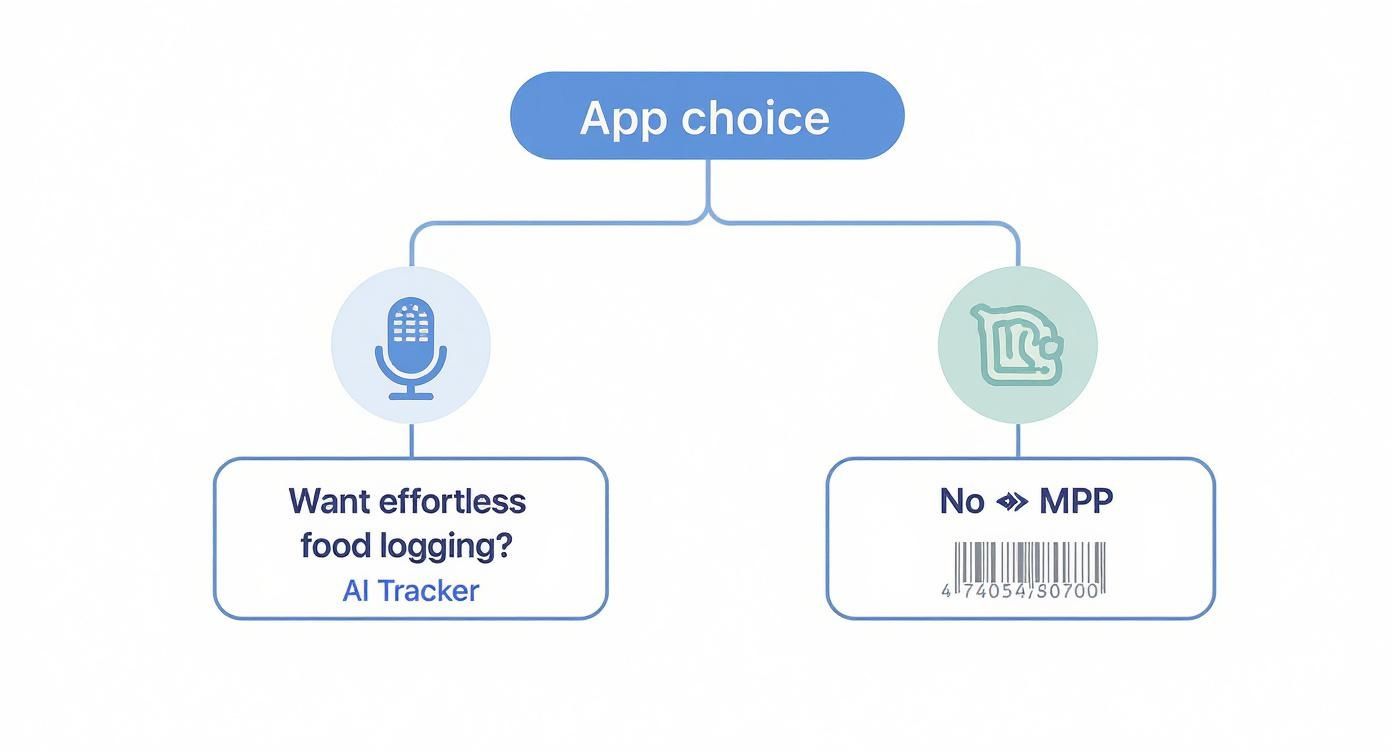
The flowchart makes it clear: if effortless tracking is your priority, an AI voice app is the way to go. If you prefer hands-on control, sticking with a traditional barcode scanner probably makes more sense.
The Busy Professional
Your calendar is packed with back-to-back meetings and deadlines. Meals are often grabbed on the run from a nearby cafe or deli. For you, a voice tracker isn't just nice to have; it's a game-changer. Barcode scanning is useless for that salad bar lunch, and manually entering every ingredient is a time sink you can't afford.
Instead of trying to dissect your lunch item by item, you can just say, "I had the chicken Caesar wrap for lunch." And you're done. It takes less than 10 seconds, and you're right back to your workday. That speed is what makes tracking sustainable when your schedule is chaos.
The Casual Health-Conscious Person
So, you're not training for an Ironman, but you do want to be more mindful of what you eat. Maybe you’re just trying to hit a protein goal or keep an eye on calories without getting bogged down in numbers. For you, manual logging often feels like overkill—it turns a healthy interest into a draining chore.
This is exactly where a voice-powered app fits in perfectly. It’s built for a more relaxed, sustainable approach.
- Effortless Macro Totals: Just speak your meals as you go, and you get a clear, running total of your protein, carbs, and fats.
- No Perfectionism Required: The AI gives you a solid estimate, freeing you from the stress of hunting down the exact brand or weighing every olive.
- Focus on Trends: It helps you see the big picture. You'll start noticing patterns, like maybe you need more protein at breakfast, without getting lost in the weeds of every single calorie.
A voice tracker is perfect for the person who wants 80% of the nutritional insight for 20% of the effort. It keeps you informed without demanding you become a part-time nutritionist.
The Home Cook
Do you enjoy cooking? If you make most of your meals from scratch, you already know the ultimate frustration: logging a homemade dish in a traditional app. Manually entering every single ingredient for your signature chili or a complex stir-fry is enough to make anyone give up.
Voice logging handles this beautifully. Instead of building a recipe from a dozen different components, you just describe the finished meal.
For example, you can simply say, "I had a bowl of my homemade lentil soup with a piece of sourdough bread." The AI is smart enough to understand the components and give you a reliable nutritional estimate for the whole dish. This is a massive relief for anyone who cooks regularly and has been burned by the tedious recipe-builders of the past.
Understanding App Pricing and Data Privacy
When you're hunting for a replacement for MyFitnessPal, it's easy to focus on features. But two other factors are just as crucial: the price tag and how the app handles your personal data.
https://www.youtube.com/embed/N6l-sEAwQNE
MyFitnessPal grew into a giant by using a freemium model. You get basic calorie counting for free, but you'll see ads. To get the good stuff—like macro targets and an ad-free interface—you have to pay for a premium subscription. It’s a classic strategy, and it’s a huge part of why they dominate the market.
This model is a cash cow for them. In fact, MyFitnessPal's in-app revenue is projected to hit over $16 million in 2025, leaving most competitors in the dust. It clearly works for a lot of people, but it’s not the only way to do things.
How AI Apps Approach Pricing and Privacy
The newer wave of AI-driven trackers often plays by a different set of rules. Many skip the ad-supported free version altogether, opting for a clean, subscription-only experience from day one. You might get a free trial, but the goal is to get you on a paid plan.
But the real change is happening behind the scenes, with your data. Think about it: every meal you log is a piece of incredibly personal information. For a growing number of people, knowing how that data is stored, used, and protected is non-negotiable.
The choice isn't just free-with-ads versus paid. It’s about who you trust with your health data and what you expect from the technology you interact with every single day.
A lot of modern apps are being built from the ground up with a "privacy-first" philosophy. They know users are more savvy about their digital footprint and are actively looking for services that respect their privacy. This usually means their data policies are much more straightforward.
For anyone looking at AI-powered apps, understanding the ins and outs of AI GDPR compliance is a big deal. It’s all about how your personal health and food data is managed, and for many, this focus on security is a major selling point.
What to Look for in an App’s Privacy Policy
You don’t need a law degree to figure out if an app respects your privacy. When you're weighing your options, just look for a few key signals in their policy:
- Data Sharing: Do they sell or share your anonymized data with other companies for "research" or advertising? A good app will be upfront about this and, ideally, let you opt out.
- Data Deletion: Is there a clear, easy way to wipe your account and all your data for good? This should be a basic right, not a feature buried in sub-menus.
- Clarity of Language: Is the privacy policy written for humans, or is it a wall of legal jargon designed to confuse you? Transparency is a sign of trustworthiness.
Ultimately, paying a little for an app that puts your privacy first can be a worthwhile trade-off. It gives you the peace of mind to focus on hitting your goals without worrying about where your data is ending up.
Making a Smooth Transition to a New App
So you’ve decided it’s time to find a better app than MyFitnessPal. That's the easy part. But the thought of actually leaving years of logged meals behind can feel a bit overwhelming. The good news is, switching to a more modern tracker is less about migrating old data and more about upgrading your daily habit.
Think of it as a fresh start, not a complicated chore. Instead of getting bogged down trying to import every past meal, you have a chance to build a new, more sustainable routine from scratch—one that actually works for you.

Run Both Apps in Parallel for a Few Days
One of the best ways to get comfortable with a new app is to run it alongside your old one for just two or three days. Don't stress about making the numbers match perfectly. The real goal is to experience the difference in the logging process firsthand.
You’ll quickly see how a few seconds of talking can replace minutes of typing and scanning. This side-by-side test builds confidence in the new, faster method and makes the final switch feel natural. It’s a low-pressure way to see how an effortless approach fits into your actual day-to-day life.
The point of switching isn't just to use a new app—it's to adopt a new mindset. Focus on embracing consistency over perfection, and let go of the tracking friction that caused you to look for an alternative in the first place.
Your Simple Transition Checklist
Making the change can be surprisingly simple. A great first step is exploring your options to find what truly fits your lifestyle; this guide on the best nutrition tracking apps is a solid place to start. Once you've picked a new tool, just follow this checklist to make the move completely stress-free:
- Commit to a Fresh Start: Let go of your old data. This new journey is about looking forward, not getting stuck on past logs.
- Run a 3-Day Parallel Test: Use both your old and new apps to feel the difference in speed and ease.
- Learn the New Workflow: Spend a few minutes getting familiar with your new app. Get used to the voice commands and learn how to make quick edits if you need to.
- Delete the Old App: Once you’re comfortable, take the final step. Removing the old app from your phone solidifies your commitment to a simpler, more sustainable tracking habit.
Common Questions About AI Food Trackers
Switching up your food tracking method is a big move, and it's smart to have questions. If you've spent years in the manual, database-heavy world of MyFitnessPal, the idea of just talking to an app can feel like a totally different ballgame. Let's tackle some of the most common things people ask.
A lot of people get stuck on one big question: can an AI tracker really be accurate enough? It's a fair point, and the answer really boils down to what you're trying to achieve.
AI food trackers are built to give you highly reliable estimates for everyday tracking. They're fantastic at painting a clear picture of your intake—like whether you're hitting your protein target or going overboard on carbs—without needing you to get bogged down in clinical precision. For anyone who just wants to be more mindful and stay consistent, this "good enough" accuracy is far more sustainable than weighing every gram of chicken breast.
Can I Still Log Specific Brands or My Own Recipes?
You bet. The power of a voice-powered system is how flexible it is. It's perfect for quick, general descriptions, but you can also get as specific as you need to.
For example, instead of just saying, "I had a protein shake," you can get more detailed: "I had a protein shake with one scoop of Optimum Nutrition vanilla whey and a cup of almond milk." The more detail you give it, the sharper the AI's nutritional estimate becomes. The same logic applies to your homemade chili—just list off the main ingredients, and it will figure it out.
This knack for handling both vague and detailed entries makes it a practical tool for how people actually eat, which is a big reason many find it a better app than Myfitnesspal for day-to-day life.
What if the AI Misunderstands What I Ate?
Look, no tech is flawless. Sometimes the AI is going to hear "bacon" when you said "baking." The best AI trackers are designed for this, making it super simple to correct any mistakes on the fly.
Most apps let you just tap on an entry and make a quick text edit. But here’s the cool part: the AI actually learns from your corrections. When you fix a mistake, you're not just fixing one log entry; you're teaching the system to get smarter and more in tune with your specific diet and speech patterns.
Think of it less like a rigid database and more like a smart assistant that gets better at its job the more you interact with it. Every quick edit helps tailor the experience just for you.
This simple correction loop builds trust and keeps your log accurate without becoming a major headache. It’s all about making food tracking feel supportive, not like another chore on your to-do list.
Ready to stop typing and start talking? See how Munchlog.ai makes tracking your food as easy as having a conversation. Ditch the manual logging and discover a smarter, faster way to stay on top of your nutrition goals. Try Munchlog.ai today!