
The Real Scoop on Calories in Air Fried Chicken Breast
Discover the true calories in air fried chicken breast and learn how simple recipe changes affect your macros. Find out how easy it is to track your meals.
Posted by
 Munchlog
Related reading
How Many Calories in Bread and Butter? (It's More Than You Think)
Curious about calories in bread butter? This clear guide breaks down the numbers for different bread types and shows you how to track snacks with ease.
How to Count Calories Without the Stress
Learn how to count calories easily with practical, mindful tracking tips for sustainable progress toward your goals.
What Is a Calorie Deficit? A Stress-Free Guide to How It Works
what is calorie deficit diet: discover how it works, how to calculate your deficit, and tips to start without stress.
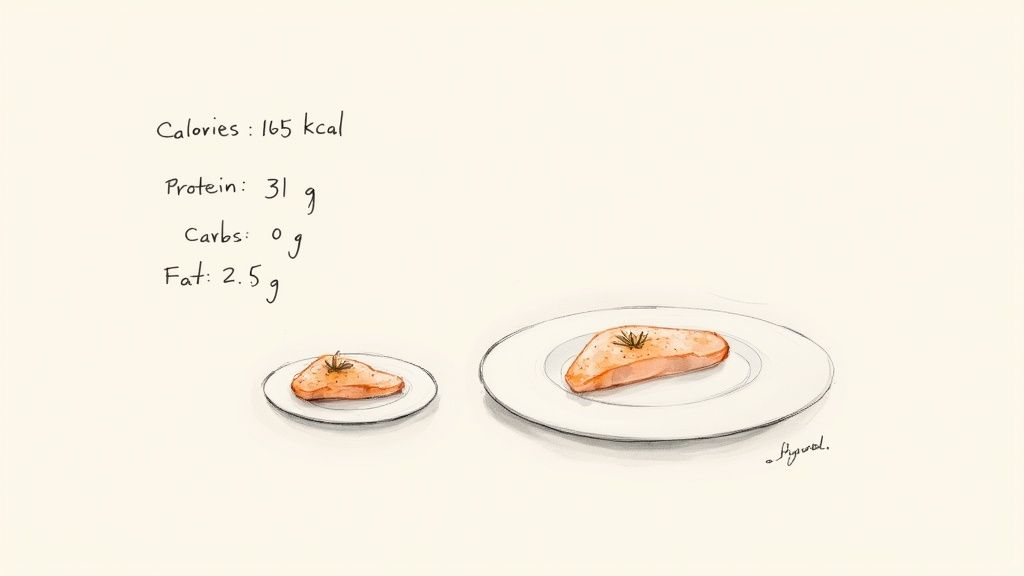
If you're keeping a casual eye on your nutrition, air-fried chicken breast is a total game-changer. A standard 100g (about 3.5 ounces) serving of boneless, skinless chicken breast cooked in an air fryer typically lands somewhere between 165-190 calories. Even better, it packs a serious protein punch with 30-35 grams.
This makes it a super lean and satisfying protein source, perfect for building a meal that keeps you full without feeling like you're on a strict diet.
Your Quick Guide to Air Fried Chicken Calories
Let's be real—you probably love your air fryer because it delivers that amazing crispy chicken without all the guilt. But when it comes to tracking your food, it can feel like a bit of a guessing game. Is it really that much healthier?
The short answer is a resounding yes. The magic of the air fryer is how it mimics that deep-fried texture using just circulating hot air and a tiny bit of oil, if any at all.
This simple change in cooking method makes a huge difference. For example, a single chicken breast submerged in a deep fryer can easily clock in at around 364 calories and 18.5 grams of fat. Cook that same piece in an air fryer, and the numbers drop to just 188 calories and only 6 grams of fat. You're looking at nearly half the calories!
Air Fried Chicken Breast Nutrition At a Glance (100g Serving)
To give you a clear starting point, here’s a quick table. This is your baseline for a plain, boneless, skinless chicken breast before you add any breading, marinades, or sauces.
| Nutrient | Estimated Amount |
|---|---|
| Calories | 165-190 kcal |
| Protein | 30-35 g |
| Fat | 4-7 g |
| Carbohydrates | 0 g |
Having these numbers in your back pocket makes logging meals so much easier. Instead of getting bogged down in complex calculations, you have a solid estimate to work with. Of course, building healthy habits goes beyond just one meal. Many people find that using meal kits specifically designed for weight loss helps them stay consistent with their calorie goals day in and day out.
And with a tool like munchlog.ai, you don't even have to memorize this stuff. You can simply say, "I had a medium air fried chicken breast," and the app does the heavy lifting for you. It's all about making mindful eating feel completely natural, not like a chore.
Why Air Frying Is Healthier Than Deep Frying
So, what’s the big deal with air frying, anyway? It sounds like some space-age tech, but the secret is actually pretty simple. An air fryer doesn't "fry" in the way you might think. Instead, it acts like a powerful little convection oven, blasting hot air all around your food at high speed.
This tornado of hot air is the key to creating that crispy, golden-brown crust we all love, but it does it with a tiny fraction of the oil you'd use for deep frying. You're essentially crisping the chicken from the outside in with superheated air, rather than dunking it in a vat of hot fat. That one simple difference makes a massive impact on your calorie budget.
The Oil Difference
Deep frying requires submerging food completely in hot oil. As it cooks, the food sponges up a ton of that oil, which means you're also absorbing all its extra fat and calories. While a great way to cook, it's helpful to see how it stacks up against traditional fried chicken recipes to understand the difference.
An air fryer, on the other hand, usually just needs a light spritz of cooking spray or maybe a teaspoon of oil tossed with the food. Sometimes, you don't need any at all. This simple switch drastically cuts the fat content, which is why the calories in air fried chicken breast are so much lower than its deep-fried counterpart.
The real win here is getting the flavor and texture you're craving without the heavy calorie and fat load from all that oil. It’s the perfect middle ground for anyone who wants to enjoy their food without feeling like they're on a super-restrictive diet.
Comparing Cooking Methods
Let's put this into perspective and see how it stacks up against other ways to cook chicken:
- Baking: A great low-fat choice, but let's be honest—it rarely gives you that truly crispy skin or crunchy coating you get from frying.
- Pan-Frying: This method can create a nice crust, but it usually needs a good bit more oil than an air fryer to keep the chicken from sticking and to get an even cook.
- Deep-Frying: This delivers maximum crunch, no question. But it also adds the most calories and fat by a country mile because the chicken soaks it all up.
Air frying really hits that sweet spot. It gives you a result that’s worlds crispier than baking but is significantly lighter than deep-frying or even pan-frying. For instance, a standard air-fried chicken breast with a light breading and minimal oil can come in around 219 calories per serving. It’s an easy swap that makes a real difference in your daily intake.
This makes tracking your meals with an app like munchlog.ai feel less like a chore and more about making smart, simple choices that still let you eat delicious food.
How Your Recipe Changes the Calorie Count
That baseline number we’ve been talking about is a great starting point, but let’s be honest—most of us aren't just eating plain, unseasoned chicken. The fun is in the recipe, and every ingredient you add can nudge the final calorie count up or down.
This isn’t about cutting out the good stuff. It’s simply about being aware of what you’re eating. A few small tweaks can make a huge difference, letting you pack in all the flavor you want while keeping your meal lean and satisfying.
Skin-On vs. Skinless
One of the biggest nutritional game-changers is the skin. While that crispy chicken skin is hard to resist, it’s also where a lot of the fat is concentrated.
Choosing a skinless breast over a skin-on one can save you 50-100 extra calories and a good few grams of fat. If you're looking for a quick and easy way to lighten your meal, this is it. You'll barely miss it, but your calorie log will thank you.
The Impact of Breading and Coatings
Next up: that delicious, crunchy coating. It’s what makes air-fried chicken feel like such a treat, but the type of breading you choose really matters.
- Dry Rubs: A simple mix of spices like paprika, garlic powder, and oregano is your leanest bet. You get a massive flavor punch for virtually zero calories.
- Light Flour Dusting: A thin coating of seasoned flour adds a classic, subtle crunch for around 30-50 extra calories.
- Full Breading (Panko/Breadcrumbs): Dipping your chicken in an egg wash and then coating it in a thick layer of panko or breadcrumbs will give you that ultimate crunch. Just know it also adds 100-150 calories (or more), mostly from carbs.
If you’re comparing cooking methods, it’s interesting to see just how much preparation matters. For a different perspective, check out this guide on how many calories are in a boiled chicken breast.
Marinades and Oils
Finally, let’s look at what you put on the chicken before it goes into the air fryer. A little oil is essential for getting that crispy finish, but marinades can be a sneaky source of hidden calories.
A quick spritz of cooking spray or a light toss in a teaspoon of oil is usually all you need. That little bit adds only about 40 calories and ensures a golden-brown crust.
Watch out for sugary marinades, though. Sweet glazes made with BBQ sauce, honey, or teriyaki can easily tack on 60-100 calories from just a couple of tablespoons. If you want to keep it light, stick to marinades built on vinegar, citrus juice, herbs, and spices.
The table below breaks down how these popular additions can affect the nutrition of a standard 100g air-fried chicken breast.
How Common Add-Ons Change Your Chicken's Nutrition
| Preparation Style | Estimated Added Calories (per 100g) | Key Macro Impact |
|---|---|---|
| Keeping the Skin On | +50-100 calories | Significantly increases fat content. |
| Light Flour Dusting | +30-50 calories | Adds a small amount of carbohydrates. |
| Heavy Panko Breading | +100-150 calories | Adds a significant amount of carbohydrates. |
| Teaspoon of Oil | +40 calories | Primarily adds fat. |
| Sugary Marinade (2 tbsp) | +60-100 calories | Adds carbohydrates (mostly sugar). |
As you can see, a "naked" chicken breast is a blank canvas. The choices you make from there determine the final nutritional profile of your meal.
This infographic gives a great visual of why air frying is so much leaner than its deep-fried cousin.
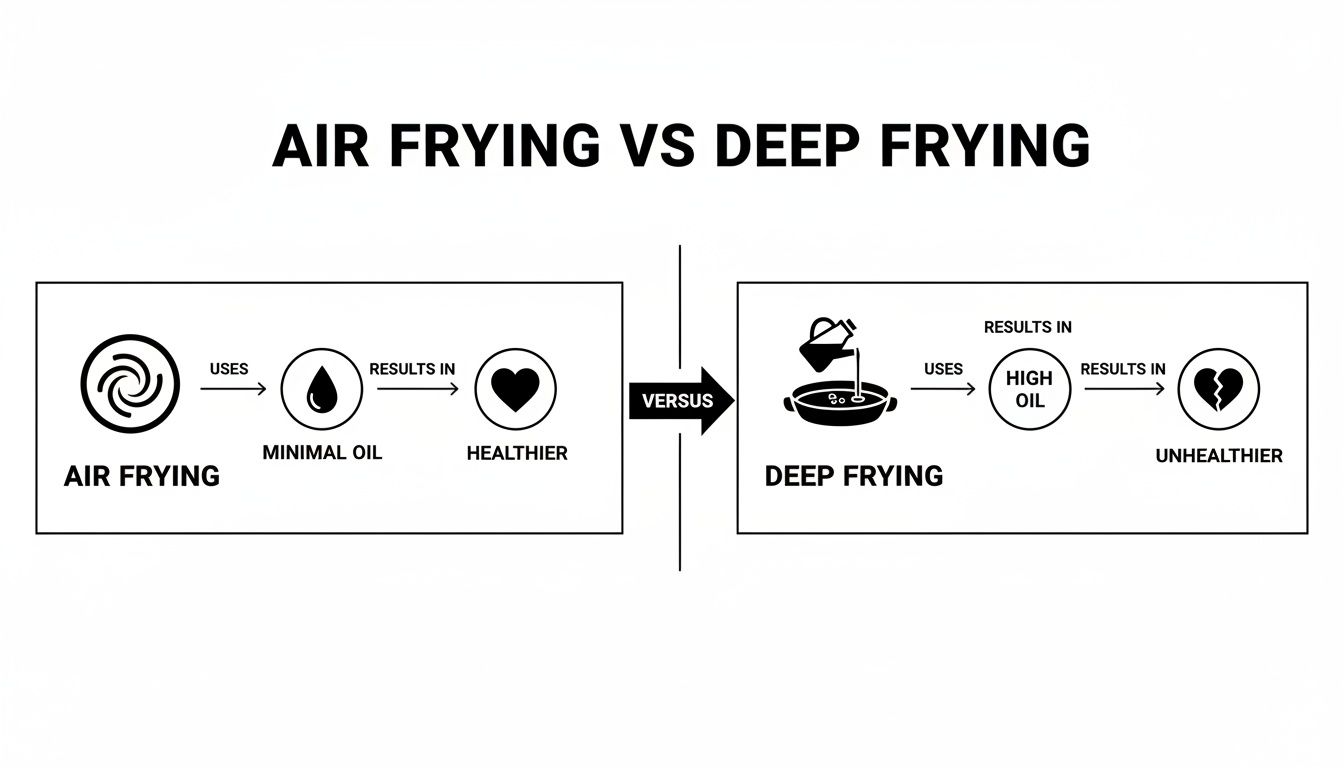
Ultimately, air frying slashes the amount of oil needed, which is what makes it such a fantastic tool for healthier cooking. Understanding these small details makes tracking your food in an app like munchlog.ai so much more accurate. You can just say "air-fried chicken with BBQ sauce," and the AI will handle the calculations for you.
How to Estimate Portion Sizes Without a Scale
Let's be realistic—pulling out a food scale for every meal isn't always going to happen. While scales are super accurate, they’re not always practical when you’re in a rush, eating out, or just trying to live your life. The great news is you don't need one to get a solid estimate of your portion size.
The goal isn't to be perfect. It’s about building an intuitive sense of how much you're eating so that tracking your food becomes a sustainable, almost effortless habit. After all, nobody wants to be that person who brings a food scale to a dinner party.
Using Your Hand as a Guide
You carry one of the best portioning tools with you everywhere you go: your hand. It’s a surprisingly consistent and personalized way to eyeball food amounts without any fancy gear.
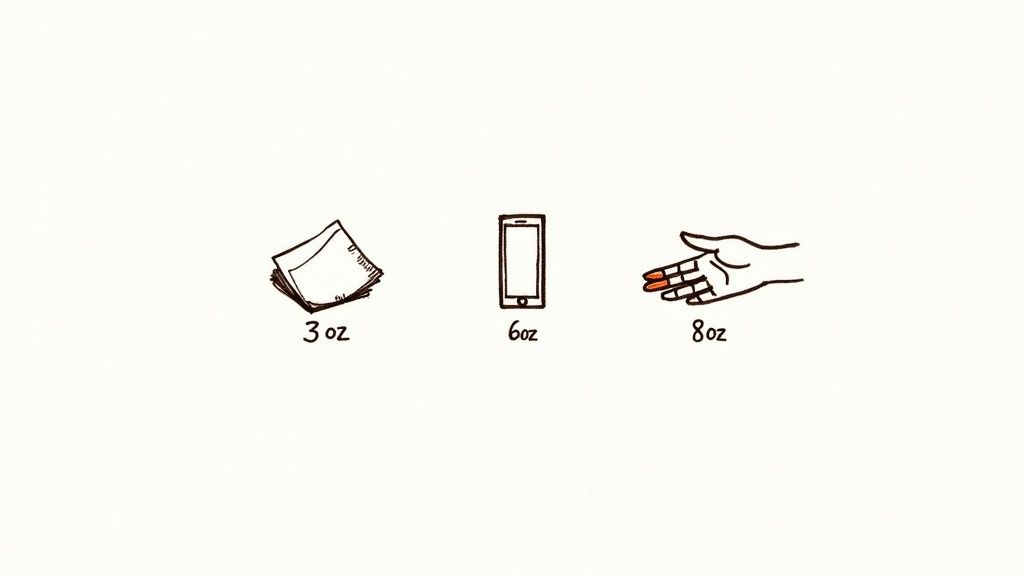
- Palm of Your Hand: A piece of cooked chicken that fits into the palm of your hand (not including your fingers) is roughly 3 ounces (about 85g). This is a super common serving size and a fantastic mental benchmark.
- A Deck of Cards: If you prefer a non-hand-related visual, a standard deck of playing cards is also about the size of a 3-ounce serving. It's a classic trick for a reason—it’s easy to picture.
These quick comparisons help you gauge the calories in your air fried chicken breast without getting bogged down in the details. It's all about being mindful, not militant.
Everyday Objects for Larger Portions
Sometimes a bigger piece of chicken is on the menu, and that’s perfectly fine. Other common items can help you size up those larger servings just as easily.
The key is to find a visual reference that clicks for you. Once you have a few reliable cues, estimating becomes second nature, making food logging a quick, stress-free habit instead of a complicated task.
- Your Smartphone: The average smartphone is a great stand-in for a 6-ounce (about 170g) piece of cooked chicken breast. It's a modern, relatable reference for a more substantial, protein-packed meal.
- A Checkbook: Though less common now, a standard checkbook is another good visual for a 6-ounce portion.
With these visual shortcuts in your back pocket, logging your meals with munchlog.ai becomes a breeze. You can simply say, "I had a piece of air-fried chicken about the size of my phone," and the AI can handle the math.
While estimation is a fantastic skill for everyday life, if you're curious about when precision really matters, you can learn more in our guide on how to weigh food for weight loss.
Logging Your Chicken in Seconds with Munchlog AI
So, you’ve cooked up a perfect air-fried chicken breast and used your hand or phone to guess the amount. Now what? This is where the old way of tracking gets frustrating. You’d have to open an app, type in a search, scroll through an endless database, and hope you find an entry that matches what you actually ate. It's a chore, and honestly, it’s the point where most of us just give up.
This is exactly the problem Munchlog.ai was built to solve. Forget typing and searching—just talk to it.
Effortless Logging with Your Voice
The whole idea behind Munchlog.ai is to make food tracking feel as natural as telling a friend what you had for dinner. There's no clunky interface or long list of foods to pick from. You just say what you ate, and the AI handles the rest.
For example, after your meal, you could just say:
"I had about six ounces of air fried chicken with a light panko breading and a little olive oil."
And that's it. Munchlog.ai understands the context—the food, the portion, the cooking method, and even the extras—to pull up the most accurate nutritional info it can find. All that manual work and guesswork? Gone.
This screenshot gives you a peek at how simple the interface is. It’s designed from the ground up to be quick and easy.
The clean design puts the focus on logging your meal and moving on with your day. This kind of easy, frictionless process is the secret to building a consistent tracking habit that doesn't feel like a burden.
Smart AI That Understands You
The app does more than just listen; it actually pieces together the full story of your meal. We know that a standard air-fried chicken breast has around 180-219 calories per serving, with protein accounting for a whopping 45-64% of its total calories. It's a true nutritional powerhouse, a fact even the American Heart Association highlights.
Munchlog.ai uses this kind of baseline knowledge to give you a solid estimate. But it also intelligently adjusts the numbers based on what you say. Mention a sugary marinade or a simple dry rub? It factors that in. This means you get a more personalized and realistic log of your intake without having to sweat every last detail.
This approach makes tracking feel less like a rigid diet and more like a mindful awareness of what you’re eating. If you're looking for other ways to simplify your nutrition goals, check out our guide on finding an easy food tracking app that actually works for you. It’s all about making healthy habits stick for good.
How to Build a Balanced Plate Around Your Chicken
Knowing the numbers for your air-fried chicken is a great start, but a truly healthy and sustainable way of eating is about the entire plate. Think of your perfectly crispy chicken as the star of the show, but the supporting cast—the sides you pair it with—is what makes it a complete, satisfying meal.
The goal isn't to create a "perfect" plate every single time. It's about adding color, texture, and a variety of nutrients that work well with your lean protein. A balanced plate keeps you feeling full and energized, and just as importantly, it makes your food more interesting and delicious. That's the real secret to sticking with healthy habits long-term.
Simple Sides for a Complete Meal
You don't need to overthink it or spend an hour on side dishes. A few smart, simple additions can round out your meal in just a few minutes.
Here are a few quick ideas:
- Something Green and Crunchy: A simple side salad with a light vinaigrette is perfect. It adds freshness, fiber, and takes about two minutes to throw together.
- Air-Fried Veggies: Once your chicken is done, toss some broccoli florets, asparagus spears, or bell pepper strips with a touch of oil and seasoning. A few minutes in the air fryer and they're ready.
- Smart Carbs: A scoop of quinoa, a small baked sweet potato, or some brown rice will give you sustained energy and make the meal feel much more substantial.
This mindset is exactly what we built Munchlog.ai around. It’s not about restriction or chasing some impossible ideal. It's simply about awareness—making conscious choices that feel good and are easy to stick with.
When you start casually logging what you eat with just your voice, you begin to see your own patterns without even trying. You might notice, "Hey, I haven't had many vegetables today," or realize that adding a complex carb at dinner keeps you from snacking later.
These little insights, discovered without any stress or judgment, are what lead to real, lasting change. You get to eat the crispy, delicious chicken you love while gently steering your overall diet toward a more balanced place. It's the most natural way to stay mindful of your nutrition without disrupting your life.
Got Questions About Air-Fried Chicken Calories?
It's normal to have a few questions when you're trying to track your food. Let's clear up some of the most common ones so you can log your air-fried chicken with confidence.
So, Is Air-Fried Chicken Actually a "Healthy" Choice?
Compared to deep-frying, absolutely. By using hot, circulating air instead of a ton of oil, you get that same crispy texture while slashing fat and calories. It’s a fantastic way to enjoy that satisfying crunch without derailing your nutrition goals.
How Many Calories Does Breading Really Add?
This is where things can vary a lot. A light dusting of seasoned flour might only tack on 30-50 calories. But if you're going for a full-on crunchy crust with an egg wash and panko breadcrumbs, you could easily be adding 100-150 calories (or even more) to each chicken breast.
Do I Have to Use Oil in the Air Fryer?
Technically, no, but you'll probably want to. A tiny bit of oil is the secret to getting that perfectly golden, crispy finish. We're talking a quick spritz of cooking spray or a single teaspoon of oil—which only adds about 40 calories—to take your chicken from good to great.
The goal isn't just about the final calorie number; it's about understanding what goes into it. Simple swaps, like a flavorful dry rub instead of a thick breading, can save you a surprising number of calories without sacrificing the taste you're after.
Does Leaving the Skin on Make a Big Difference?
Oh, yes. A huge difference. Chicken skin is mostly fat, and keeping it on can easily add 50-100 extra calories and a significant amount of fat to what is otherwise a very lean protein. If you're looking for the leanest option, removing the skin is one of the easiest changes you can make.
Ready to stop guessing and start tracking your food without the stress? With munchlog.ai, you can log your meals just by talking. Ditch the tedious typing and let our AI figure out the details for you. Give it a try today and see how simple mindful eating can be.