
Calories in Mixed Berries: Your Casual Guide to a Super Snack
Discover calories mixed berries: nutrition facts, portion tips, and easy ideas to track macros without the guesswork.
Posted by
 Munchlog
Related reading
How Many Calories in Bread and Butter? (It's More Than You Think)
Curious about calories in bread butter? This clear guide breaks down the numbers for different bread types and shows you how to track snacks with ease.
How to Count Calories Without the Stress
Learn how to count calories easily with practical, mindful tracking tips for sustainable progress toward your goals.
Your Simple Guide to Using a Macro Calorie Tracker
Learn how a macro calorie tracker can help you understand your diet without the stress. Track protein, carbs, and fats to reach your wellness goals easily.
A cup of mixed berries usually has around 70 to 80 calories, making them a perfect choice for a low-calorie, high-nutrient snack. These colorful fruits are more than just a sweet treat; they're packed with fiber and vitamins, keeping you full and satisfied.
Your Quick Guide to Mixed Berry Calories
Let's get right to the numbers. When you're trying to be mindful of your nutrition, knowing the basics of your favorite snacks is a huge help. Mixed berries are a fantastic option because you get tons of flavor without a lot of calories. Whether you grab them fresh or frozen, they fit easily into any eating style.
For example, a typical one-cup serving of frozen mixed berries contains roughly 70-80 calories. It's pretty much fat-free and gives you a solid 5-6 grams of dietary fiber, which is amazing for helping you feel full longer. If you want to dive deeper, you can explore the complete mixed berries nutrition facts to see the full breakdown.
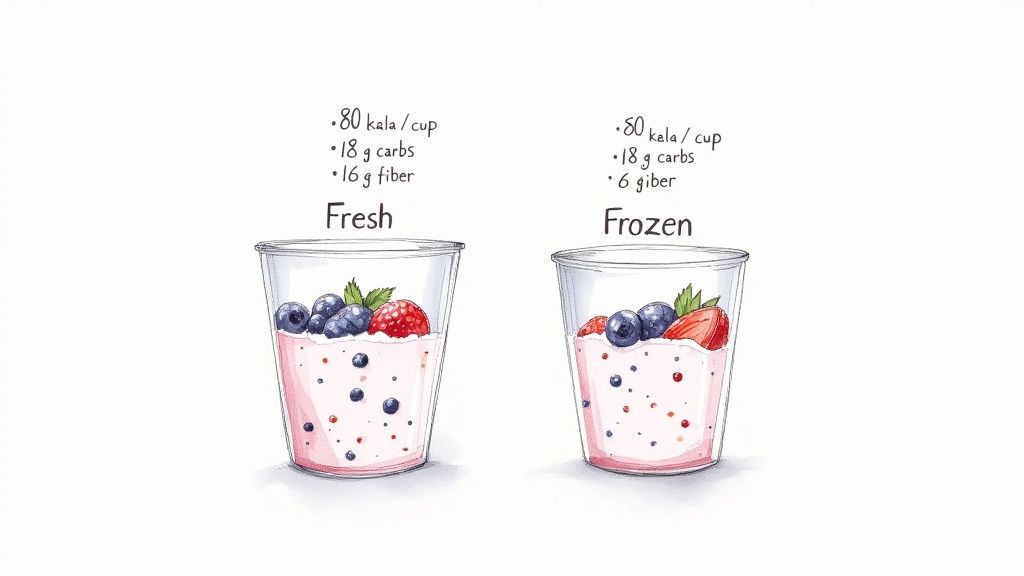
Fresh vs. Frozen Berries
I get this question all the time: are frozen berries just as good as fresh ones? The answer is a big yes! Nutritionally, they're super similar, especially if you stick to the unsweetened frozen blends. Flash-freezing berries right after they're picked locks in all the good stuff.
Here’s a quick comparison to give you an idea of what to expect from a cup of each.
Fresh vs. Frozen Mixed Berries at a Glance (Per Cup)
This table gives you a quick look at the typical nutritional values for fresh and frozen mixed berries so you can see how they stack up.
| Nutrient | Fresh Mixed Berries (Approx.) | Frozen Mixed Berries (Unsweetened, Approx.) |
|---|---|---|
| Calories | ~117 kcal | ~70-80 kcal |
| Carbs | ~28 g | ~18 g |
| Fiber | ~6.7 g | ~5-6 g |
| Sugar | ~14 g | ~11 g |
As you can see, the numbers are pretty close. The small differences usually come down to the specific berry mix and water content. At the end of the day, both are excellent choices for smoothies, yogurt, or just snacking.
Berries Are More Than Just Calories
It’s smart to know the calories in mixed berries, but honestly, that’s not their coolest feature. The real magic is what you get alongside those calories. They're a great choice when you're eating mindfully because they actually help you feel satisfied, not just full of empty energy.
A huge part of that comes from their awesome fiber content. Fiber is your best friend for managing hunger because it helps you feel fuller for longer. A single cup of mixed berries can pack 6-7 grams of fiber, which slows down digestion and keeps those annoying hunger pangs away.
A Natural Fix for Your Sweet Tooth
Let's talk about sugar cravings. We all get them, and it’s way too easy to grab a processed snack that throws you off your game. Mixed berries are the perfect solution—a juicy, delicious alternative that satisfies your sweet tooth without the refined sugars and empty calories you'd get from a cookie.
Think of it this way: swapping a handful of cookies for a bowl of berries isn't about restriction. It's about upgrading your snack to one that gives you vibrant flavor, sustained energy, and a ton of valuable nutrients.
Adding more berries to your routine is a simple, effective swap. You get a pop of amazing flavor and a serious nutritional boost that supports your goals, making mindful eating feel both easy and enjoyable.
A Detailed Breakdown of Berry Macros
If you like to get a bit more detailed, it's cool to see how different berries contribute to a mix. Each type brings something unique to the table, especially when it comes to carbs and fiber. Understanding this helps you appreciate why a bowl of mixed berries is such a nutritional powerhouse.
When you look at the numbers, you'll see how a mixed berry blend is so low in calories yet so packed with nutrients. For example, a 100-gram serving (about 3.5 ounces) can range from just 32 calories for strawberries to 57 calories for blueberries. What's really impressive is the carb-to-fiber ratio. Raspberries, for instance, have about 11.9 grams of carbs, but a whopping 6.5 grams of that is fiber. According to the experts at Healthline, this high fiber content is a big reason why berries are so good for you.
Understanding Net Carbs
This brings us to a helpful concept: net carbs. To figure this out, you just subtract the fiber from the total carbs. Why bother? Because fiber isn't digested like other carbs, so the net carb number gives you a better idea of what actually impacts your body.
Nutritional Profile of Common Berries (Per 100g)
This table breaks down the typical values for the most common berries you'll find in a mix. It’s a great quick-reference for seeing how each one stacks up.
| Berry Type | Calories (kcal) | Carbs (g) | Fiber (g) | Net Carbs (g) |
|---|---|---|---|---|
| Strawberries | 32 | 7.7 | 2.0 | 5.7 |
| Blueberries | 57 | 14.5 | 2.4 | 12.1 |
| Raspberries | 52 | 11.9 | 6.5 | 5.4 |
| Blackberries | 43 | 9.6 | 5.3 | 4.3 |
As you can see, raspberries and blackberries are the real fiber superstars, which keeps their net carb count super low.
In short, berries are one of the most satisfying snacks you can grab, helping you stay on track without feeling like you're missing out. If you're curious to learn more about the building blocks of your food, check out our guide on what macros are in food.
How to Eyeball Your Berry Portions (No Scale Needed!)
Let's be real—you're not always going to have a food scale with you. The good news is, you don't need one. With a few simple visual tricks, you can get pretty good at estimating your mixed berry portions, whether you're at your desk or grabbing a handful from the fridge.
The goal is to get comfortable enough with these cues that logging your food becomes second nature, freeing you from the need for constant, precise measurements.
Simple Visual Cues for Everyday Tracking
The best measuring tool you have is already with you: your hands. They're surprisingly consistent and always available.
Here’s how to use them for quick estimates:
- A Loosely Cupped Hand: This holds about one-half cup of mixed berries. It's a great size for a quick snack or for topping off a bowl of yogurt.
- Two Cupped Hands Together: When you bring both hands together to form a bowl, you're looking at roughly one full cup of berries. This is a solid serving for a smoothie or your morning oatmeal.
Another handy comparison is a standard tennis ball. Its volume is almost identical to a one-cup serving. So, if your pile of berries is about the size of a tennis ball, that's a pretty good estimate.
For more tips on gauging fruit servings, take a look at our guide on estimating the calories in a fruit bowl.
Simple Ways to Add Berries to Your Day
Knowing the calories in mixed berries is one thing, but the real fun starts when you actually eat them. The best part? You don't need a fancy recipe to get all their benefits. Weaving berries into your day is often as simple as tossing a handful into whatever you're already making.
Think of them as a natural flavor and nutrition booster for the meals you already love. It’s a simple, delicious way to hit your health goals without even trying too hard.
Quick and Easy Berry Pairings
Getting more berries into your diet is all about finding easy combos. Here are a few no-fuss ideas to get you started:
Morning Yogurt or Oatmeal: A handful of mixed berries can completely transform a boring breakfast. The fiber from the fruit plus protein from something like Greek yogurt is a classic combo for a reason—it'll keep you feeling full and satisfied all morning.
Post-Workout Smoothies: Toss a cup of frozen mixed berries into the blender with your favorite protein powder and a splash of almond milk. It's a refreshing way to refuel without a bunch of extra calories.
A Simple Snack: Honestly, sometimes the best way to enjoy berries is just in a bowl by themselves. It's the perfect solution for a sweet craving, and it's way better than reaching for candy or cookies.
Berries are more than just a snack—they're an easy first step toward more mindful eating. Because they're so versatile, you can add a ton of nutrients to your diet without any complicated meal prep.
It's no surprise that as people focus on healthier eating, fruits like berries are getting more attention. They're a perfect example of a food that's low in calories but high in nutrients. Their popularity in everything from breakfast bowls to smoothies just shows how easy they are to work into any routine. While you can dive deep into their widespread nutritional benefits, the main takeaway is their simplicity. Just a handful a day can make a real difference.
How to Choose the Best Store-Bought Berries
Walking down the grocery aisle, you’ll find tons of options for mixed berries. The main thing to remember is that the calories in mixed berries can sneak up on you—not from the fruit itself, but from stuff that's added to them. You don't need to be a nutritionist to make a good choice; you just need to know what to look for.
The biggest culprit is added sugar, which often finds its way into frozen blends, dried berry mixes, and especially jams. These sugars pack in extra calories with zero nutritional upside, which kind of defeats the purpose of eating healthy fruit.
Reading the Label Like a Pro
Forget about studying the entire nutrition panel. When you’re in a hurry, just check two spots on the package. It’s the fastest way to know what you're getting.
Scan the Ingredient List: This is your best friend. Ideally, the list should be short and simple, listing only fruits like "strawberries, blueberries, raspberries." If you see "sugar," "syrup," or "fruit juice concentrate," that’s a red flag for added sugar.
Look for "No Sugar Added": Many brands make it easy for you by printing this right on the front. It’s a pretty reliable shortcut to know you’re just getting the berries, so the calorie count will be what you’d naturally expect.
By simply grabbing unsweetened frozen berries instead of the ones packed in syrup, you're in complete control. You get all the pure, nutrient-packed goodness of the fruit without any of the unnecessary extras.
Effortless Tracking with Voice Logging
This is where knowing the calories in mixed berries becomes truly simple. Instead of messing with a clunky app, MunchLog lets you log your food just by talking. It's built to fit into your life, not interrupt it.
Imagine you just made a smoothie. Instead of stopping to type, you can just say, "Log half a cup of frozen berries in my smoothie." The AI understands natural language, so you don't have to talk like a robot. It just gets it. This makes tracking your coffee, snacks, or that homemade stir-fry feel totally effortless.
How It Fits Your Routine
This voice-first approach removes the biggest hassle of tracking: the effort. Here are a few real-world examples of how easily you can log your berries:
- For breakfast: "Add a cup of mixed berries to my yogurt."
- As a snack: "Log a handful of fresh berries."
- Pre-workout: "Track a smoothie with mixed berries and protein powder."
For anyone who already uses their phone for quick notes, learning how to transcribe voice memos on your iPhone can make your daily logging even more seamless. The whole idea is to make tracking as natural as sending a text.
The core benefit is simple: it makes tracking feel like a background habit rather than a chore. This effortless method helps you stay mindful of your nutrition without the stress, making it easier to stick with your goals.
This casual, conversational approach is at the heart of what makes a simple food diary app so effective, especially for busy people.
Answering Your Questions About Mixed Berry Nutrition
Still have a few questions about the calories in mixed berries or how to fit them into your day? Perfect. Let's clear up some of the most common ones so you can feel totally confident adding them to your routine.
Are Frozen Berries as Nutritious as Fresh Ones?
Yes, they absolutely are! Frozen berries are one of the best nutritional deals you can find. Berries are usually flash-frozen right after being picked, which does an amazing job of locking in their vitamins and antioxidants.
As long as you're grabbing bags with no added sugar, frozen berries are a fantastic—and often much cheaper—alternative to fresh. Their nutritional profile is nearly identical.
How Should I Track the Sugar in Berries?
The good news is, you really don't have to stress about this. The sugar in berries is fructose, a natural sugar that comes with a ton of fiber. That fiber is key because it slows down how your body absorbs the sugar, preventing the energy spikes you get from processed sweets.
When you log your portion in an app like MunchLog, it handles the math for you. You can just say, "Log a cup of mixed berries," and the app does the rest. Learning how to effectively use voice to text can make this daily logging process completely seamless.
Is It Possible to Eat Too Many Berries?
While it’s tough to overdo it on something as healthy as berries, it's always smart to be mindful of portions. Because they’re so high in fiber, eating a huge amount in one sitting might cause some digestive issues for some people.
A great target for most of us is about one to two cups a day. This amount gives you all those awesome health benefits without going overboard.
Ready to stop guessing and start tracking effortlessly? With MunchLog, you can log your meals just by speaking. Get started today and see how easy mindful eating can be. Visit https://munchlog.ai to learn more.