
Dry Roasted Peanuts Nutrition Facts: What's in a Handful?
dry roasted peanuts nutrition facts: discover calories, protein, and fats in a tasty snack and how to track them easily.
Posted by
 Munchlog
Related reading
The Real Scoop on Calories in Air Fried Chicken Breast
Discover the true calories in air fried chicken breast and learn how simple recipe changes affect your macros. Find out how easy it is to track your meals.
How Many Calories in Bread and Butter? (It's More Than You Think)
Curious about calories in bread butter? This clear guide breaks down the numbers for different bread types and shows you how to track snacks with ease.
How to Count Calories Without the Stress
Learn how to count calories easily with practical, mindful tracking tips for sustainable progress toward your goals.
Ever grab a handful of dry roasted peanuts and wonder what you're actually eating? It's a classic snack for a reason! A standard one-ounce serving (about 28 grams) packs around 160-170 calories, a solid 7 grams of protein, and roughly 14 grams of healthy fats. That simple combo is what makes them so great for keeping you full and energized between meetings or classes.
What's In a Handful of Peanuts
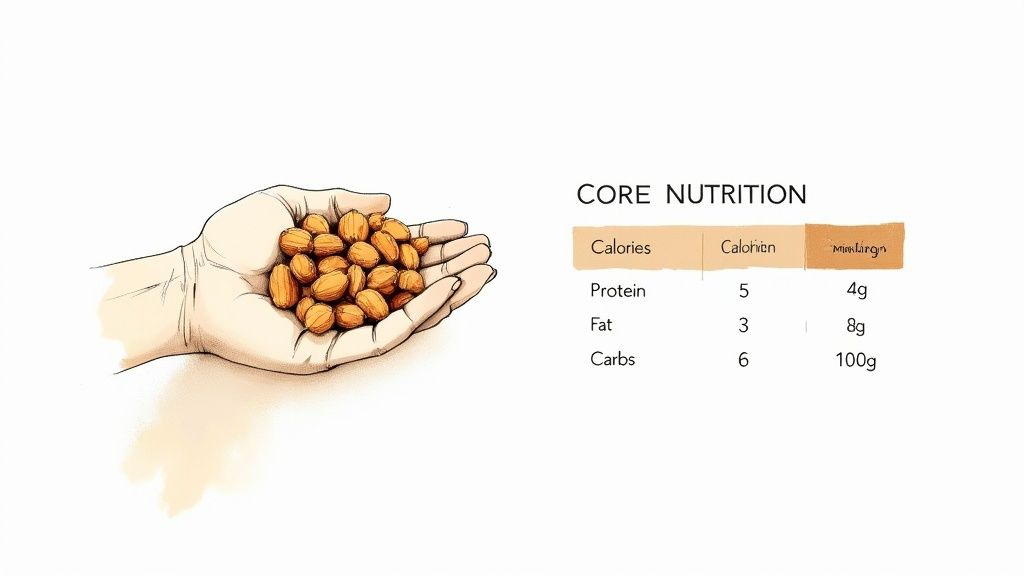
Let’s break down the core dry roasted peanuts nutrition facts so you know what’s fueling you. Think of this as the simple cheat sheet for your go-to snack, without getting lost in complex charts.
Peanuts are famously "calorie-dense." That's just a fancy way of saying a small amount delivers a big energy punch. This energy comes from a fantastic balance of what we call macronutrients—protein, fat, and carbs. For every 100 grams of dry roasted peanuts, you're looking at about 587 calories, mostly from their high content of heart-healthy fats.
Dry Roasted Peanuts Nutrition at a Glance
Here’s a quick look at the numbers for unsalted dry roasted peanuts. It’s a simple way to see how a typical handful stacks up against a larger 100g amount, which is often used for nutritional comparisons.
| Nutrient | Amount per 1-ounce (28g) Serving | Amount per 100g |
|---|---|---|
| Calories | ~166 kcal | ~587 kcal |
| Protein | 7 g | 24.4 g |
| Total Fat | 14 g | 50 g |
| Carbohydrates | 6 g | 21 g |
| Fiber | 2.4 g | 8 g |
| Sodium | 5 mg | 18 mg |
Getting a feel for these basics is the first step toward mindful eating. When you're curious about the calories in a homemade trail mix or a peanut sauce, a recipe calorie calculator can be a super helpful tool.
And the best part? You don't have to memorize a single one of these numbers. With Munchlog, you can just say, "I had a handful of peanuts," and the app takes care of the logging for you. It’s all about making nutrition awareness feel effortless, not like homework.
Understanding Peanut Macros: Protein, Fat, and Carbs
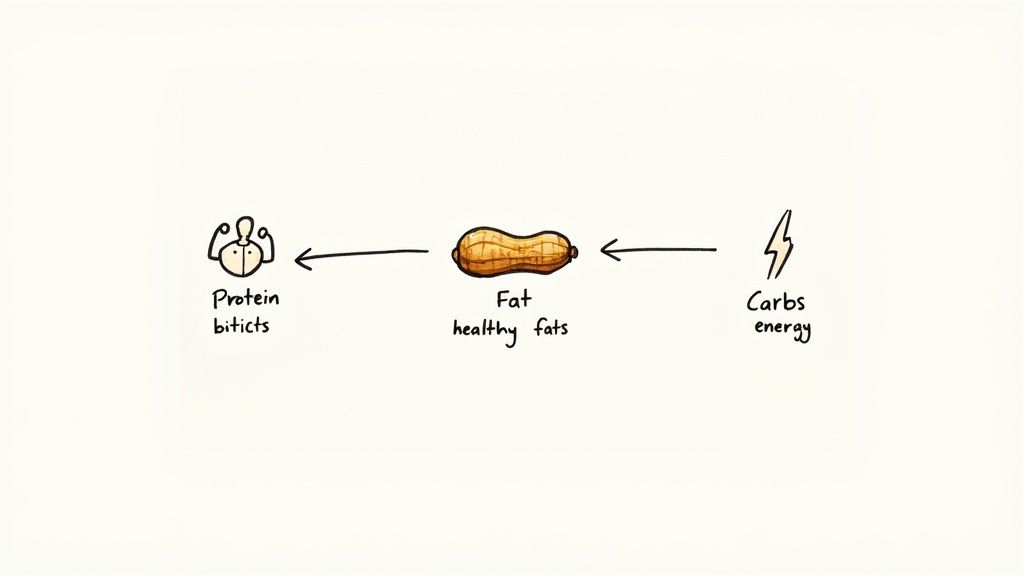
It’s one thing to see the numbers on a label, but it's another to understand what they actually mean for your day. Let's talk about the "big three" macros in dry roasted peanuts: protein, fat, and carbs. Think of them as the main characters in your snacking story.
Macros are just the nutrients your body needs in large amounts for energy. It doesn't have to be complicated—it’s just about learning what fuels you best. If this is a new concept, our simple guide on what macros are in food is a great place to start.
In peanuts, this trio works together perfectly, making them a seriously smart choice for that mid-afternoon slump.
The Power of Peanut Protein
When you feel that 3 p.m. energy dip, protein is your best friend. It’s what helps you feel full and satisfied, which is the secret to shutting down those cravings for sugary snacks. A single one-ounce handful of dry roasted peanuts delivers about 7 grams of high-quality plant-based protein, helping you stay focused and productive.
But it's not just about the number. The protein in peanuts contains a bunch of amino acids—the building blocks for your body. This makes them a surprisingly solid protein source, supporting everything from muscle health to feeling your best.
Understanding the Healthy Fats
Fat got a bad rap for years, but the kind you find in peanuts is exactly the type you want more of. Most of the fat in dry roasted peanuts is monounsaturated, the same heart-healthy goodness found in olive oil.
These "good" fats are crucial for keeping you feeling full long after you've finished snacking. They also play a big role in supporting healthy cholesterol levels. This is why a small handful of peanuts can be so much more satisfying than a candy bar that leaves you crashing an hour later.
It's a common myth that all fats are created equal. The reality is, the healthy fats in nuts are essential for absorbing vitamins and supporting your overall well-being. Focusing on these good fats is a simple way to make smarter snacking choices.
Carbs for Crash-Free Energy
Finally, let’s talk about carbs. Peanuts are naturally pretty low in carbohydrates, and the carbs they do contain are bundled with a healthy dose of fiber. This is the perfect recipe for slow-releasing, steady energy.
This means you get to skip the dramatic blood sugar spikes and crashes that come with high-carb, low-fiber snacks. The result is sustained energy that keeps you going, without the jitters or the dreaded post-snack burnout.
The beauty of tracking your food with an app like Munchlog is that you don't have to get bogged down by exact numbers. You can just say, "I had a handful of peanuts," and get a clear picture of your macros. It’s all about building awareness and making mindful choices, not stressing over perfection.
The Hidden Nutritional Perks in Peanuts
While the big three—protein, fat, and carbs—usually steal the spotlight, dry roasted peanuts are also packed with a surprising number of micronutrients. Think of them as the support crew working behind the scenes to keep your body running smoothly. You might not see them, but they're absolutely essential.
Every handful of peanuts delivers a solid dose of vitamins and minerals that support everything from your energy levels to your immune system. It’s one of the things that makes them such a great snack. You’re not just getting fuel; you're getting a dose of important nutrients without even thinking about it.
This is where casual food tracking really shines. When you tell Munchlog you had "a handful of peanuts," you're doing more than just logging macros. You're becoming more aware of foods that deliver more than just calories, helping you build a balanced approach to eating without all the stress.
Meet the Micronutrient All-Stars
Let's pull back the curtain on a few of the key players you'll find in dry roasted peanuts. You don’t need a degree in nutrition to appreciate what they do—it's all about simple, effective support for your body.
Niacin (Vitamin B3): Niacin is like the spark plug for your metabolism. It’s a vital player in converting the food you eat into energy your body can use, helping you sidestep those afternoon slumps.
Manganese: This mineral is a quiet hero for bone health and metabolism. It helps your body build connective tissue and strong bones, and it’s also involved in how you process fats and carbs. Just one serving of peanuts can knock out a good chunk of your daily manganese needs.
Vitamin E: As a powerful antioxidant, Vitamin E acts like a personal bodyguard for your cells, protecting them from damage. Keeping your cells healthy is key to feeling and functioning at your best.
Of course, that’s just the start. Peanuts also bring other important nutrients like magnesium, folate, and copper to the table. It’s this impressive lineup that elevates them from a simple snack to a nutritional powerhouse.
Why This Matters for You
When you see the full nutritional picture, you start to appreciate your food choices on a whole new level. You’re not just eating to stop your stomach from growling; you’re actively giving your body the tools it needs to thrive.
The protein in peanuts is fantastic for keeping you full, and if you’re curious about how much you should be aiming for, you can learn how to calculate daily protein needs to better match your diet to your personal goals.
Making mindful choices doesn’t have to be complicated. It can be as simple as reaching for a snack like dry roasted peanuts. And when you can track what you eat just by talking, staying on top of your nutrition becomes a seamless part of your day.
Dry Roasted vs. Oil Roasted vs. Raw Peanuts
Does it really matter how your peanuts are prepared? Yep, it does. The journey a peanut takes from the field to your hand can tweak its nutritional profile, especially when it comes to fat and sodium. Let's dig into the real differences between dry roasted, oil roasted, and raw peanuts.
The point here isn’t to label any of them "good" or "bad." It's about helping you pick what works for you and your goals. That’s the heart of the Munchlog philosophy—making informed, stress-free food choices.
The Dry Roasting Difference
Dry roasting is as straightforward as it sounds. Peanuts are cooked with dry, circulating heat, and that's it—no extra oils needed. This method is fantastic for coaxing out that deep, nutty flavor and giving them an incredible crunch.
Nutritionally, this is a clean and simple option. Because no oil is added, you aren't getting any extra fat or calories from the cooking process. In fact, the dry roasted peanuts nutrition facts are almost identical to raw peanuts. The main change is a tiny bit of moisture loss, which just concentrates all the good stuff.
What About Oil Roasted Peanuts?
Oil roasted peanuts, on the other hand, are cooked in oil. This also enhances their flavor and texture, but it does add a small amount of fat and calories to the final product.
The bigger thing to watch for with oil roasted varieties is the salt. Many are heavily salted, which can really bump up the sodium. For instance, a single serving of lightly salted oil-roasted peanuts might have around 50 mg of sodium, while heavily salted versions can pack a much bigger punch. If you're keeping an eye on your sodium, this is definitely something to be aware of.
No matter how they're prepared, peanuts are a powerhouse of micronutrients like Niacin, Manganese, and Potassium.
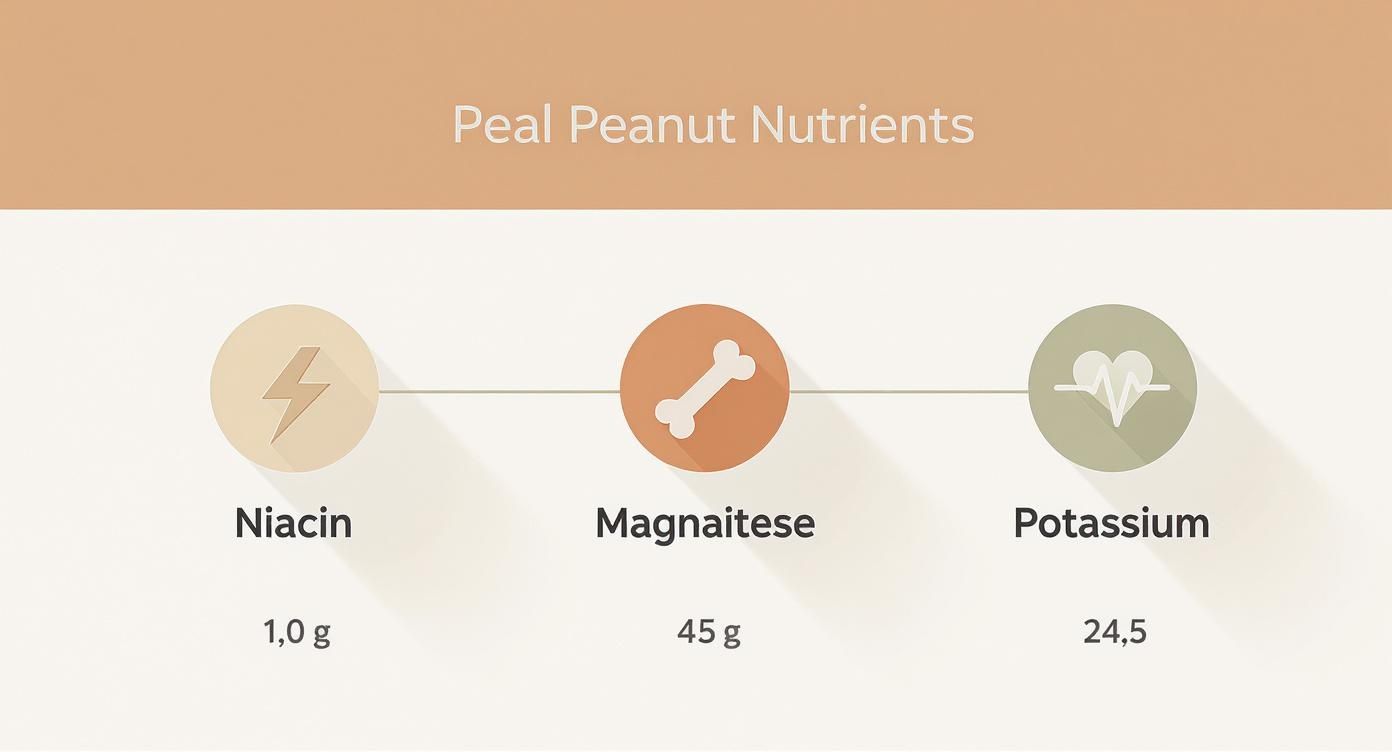
This just goes to show that any peanut is a good source of valuable nutrients that support everything from your energy levels to your bone and heart health.
A Nutritional Showdown: Dry vs. Oil Roasted vs. Raw
To really see the differences, let's put them head-to-head. The table below lays out the nutrition for a standard one-ounce (28g) serving so you can compare them at a glance.
| Nutrient | Dry Roasted (Unsalted) | Oil Roasted (Salted) | Raw |
|---|---|---|---|
| Calories | ~166 kcal | ~170 kcal | ~161 kcal |
| Total Fat | 14 g | 14 g | 14 g |
| Sodium | 5 mg | 95 mg | 5 mg |
| Protein | 7 g | 7 g | 7 g |
As you can see, the most significant difference is sodium. While the calorie and fat numbers are surprisingly close, choosing unsalted dry roasted or raw peanuts is an easy swap if you're looking to cut down on added salt.
Choosing between peanut types isn't about perfection; it's about awareness. Knowing the small differences helps you align your snacks with your personal wellness goals without obsessing over every detail.
At the end of the day, the best peanut is the one you enjoy that fits your lifestyle. Whether you prefer the clean taste of raw, the classic crunch of dry roasted, or the rich flavor of oil roasted, you’re getting a fantastic snack. And when you want to track it, just tell Munchlog what you had, and the app takes care of the rest.
Smart Snacking and Portion Control Tips
Peanuts are one of those perfect foods—delicious and packed with nutrients. But here’s the catch: they're incredibly calorie-dense, meaning a small amount goes a long way. This is where getting smart about your snacking habits pays off. It’s not about restriction, but simply about enjoying your food without accidentally overdoing it.
Think about it. Eating straight from a giant jar of peanuts is like trying to guess how much gas is in your car without a fuel gauge—you're just flying blind. But if you pour a single serving into a small bowl first, you give your brain a clear visual cue. That simple act can make all the difference.
Mindful Snacking Made Simple
Making a few small tweaks to your routine can completely change your snacking game. The goal here is to feel satisfied and in control, not like you're on some miserable diet.
Here are a few easy ideas to try:
- Pre-portion your snacks: The moment you get home from the store, take five minutes to divide that big bag of peanuts into smaller, single-serving portions. When hunger strikes, just grab one and go.
- Pair them up: Don't just eat peanuts by themselves. Combine a handful with something high in fiber and water, like a crisp apple or a few celery sticks. This creates a more balanced and filling snack that will keep you satisfied for hours.
- Slow down and savor: It's so easy to munch on autopilot while you're working or watching TV. Instead, take a moment to really focus on the flavor and crunch. This helps your brain actually register that you’ve eaten, leading to a much greater sense of satisfaction from a smaller amount.
Effortless Tracking with Your Voice
This is where the magic of casual food tracking really shines. You don’t need to pull out a food scale for every single snack. If you want to dive deeper into why you might want to measure food sometimes, our guide on how to weigh food for weight loss has some great, practical advice.
For your daily handful of peanuts, though, it can be so much simpler. Just say, "Hey Munchlog, I had a small handful of dry roasted peanuts," and let the app do the heavy lifting. It estimates the nutrition for you, keeping you in the loop without any of the usual logging friction.
Snacking shouldn't feel like a math problem. The goal is to build awareness so you can make choices that feel good, not to chase perfect numbers. Effortless tracking supports this by making consistency easy.
There’s a reason peanuts are such a staple in the US. A typical one-ounce serving of dry roasted peanuts has around 166 calories, with that fantastic mix of protein and healthy fats that makes it a top-tier snack. This mindful approach, paired with simple tracking, helps you enjoy every bite while staying aligned with your health goals.
Common Questions About Dry Roasted Peanuts
We get it—once you start paying closer attention to what you eat, the questions start popping up. Let's tackle some of the most common ones about dry roasted peanuts. Our goal is to give you simple, straightforward answers you can actually use.
Think of this as a quick chat, not a lecture. We want you to feel confident and informed about your food choices without getting bogged down in the details.
Are Dry Roasted Peanuts Good for Weight Loss?
Yes, they absolutely can be! When you eat them in moderation, dry roasted peanuts are a fantastic snack if you're mindful of your health. Their powerful combination of protein and fiber is the secret weapon here—it helps you feel full and satisfied, which can seriously curb cravings for less-healthy snacks later on.
The key, as with most nutrient-dense foods, is being mindful of your portion size. A small handful (about one ounce) is usually the perfect amount to get the benefits without going overboard on calories. Because they pack a caloric punch, mindful eating really is important. This is where casual tracking makes a huge difference.
Instead of pulling out a food scale every time, you can just tell your app, "I had a handful of peanuts." Munchlog makes it incredibly easy to log your portion without the fuss of weighing or measuring, helping you stay aware of your intake while still enjoying a delicious, satisfying snack.
Does Roasting Peanuts Destroy Their Nutrients?
That's a fantastic question, and the answer might surprise you. While the roasting process does cause some minor nutritional changes, it’s not all bad news. In fact, roasting can actually increase the bioavailability of certain powerful antioxidants, giving you an extra health boost.
Sure, a small amount of heat-sensitive vitamins might be slightly reduced, but the major players—protein, healthy fats, fiber, and most minerals—remain largely intact and ready to fuel your day. Dry roasting is an especially great method because it avoids adding any extra oils or fats, so you can be sure you're getting a major nutritional benefit from every bite.
The big picture is that the core nutritional value of peanuts stands strong through the roasting process. You’re still getting a fantastic source of protein, heart-healthy fats, and essential minerals.
What Should I Look for When Buying Peanuts?
When you’re standing in the snack aisle, the best place to start is the ingredients list. In a perfect world, it should have just one word on it: peanuts.
Many popular brands add extra salt, sugar, or oils that you just don't need. If you're keeping an eye on your sodium, look for packages clearly labeled "unsalted." Unsalted dry roasted peanuts are hands-down the top choice for getting all the health perks without any of the additives.
It’s also a good habit to check the expiration date. The healthy fats in nuts can go rancid over time, and you want to make sure you're enjoying them at their freshest and most flavorful. Keeping it simple is almost always the best strategy for smart snacking.
Ready to stop guessing and start tracking your food the easy way? With munchlog.ai, you can log your meals and snacks just by talking. No more typing, no more tedious searching—just simple, voice-powered awareness that fits into your busy life. Find out how effortless nutrition tracking can be at https://munchlog.ai.