
A Simple Guide to Good Macros for Weight Loss
Discover what good macros for weight loss really means. Learn simple, practical ways to balance protein, carbs, and fats to reach your goals without stress.
Posted by
 Munchlog
Related reading
The Real Scoop on Calories in Air Fried Chicken Breast
Discover the true calories in air fried chicken breast and learn how simple recipe changes affect your macros. Find out how easy it is to track your meals.
How Many Calories in Bread and Butter? (It's More Than You Think)
Curious about calories in bread butter? This clear guide breaks down the numbers for different bread types and shows you how to track snacks with ease.
How to Count Calories Without the Stress
Learn how to count calories easily with practical, mindful tracking tips for sustainable progress toward your goals.
Trying to figure out the "best" macros for weight loss can feel like you're drowning in conflicting advice. So, let's cut through the noise. While there's no single magic ratio that fits everyone, a fantastic starting point for most people is 40% protein, 30% carbs, and 30% fat.
This setup makes protein the star of the show (great for keeping you full and preserving muscle!), but still leaves plenty of room for the carbs and fats that fuel your day and keep your body running smoothly.
What Are Macros and Why Do They Matter?
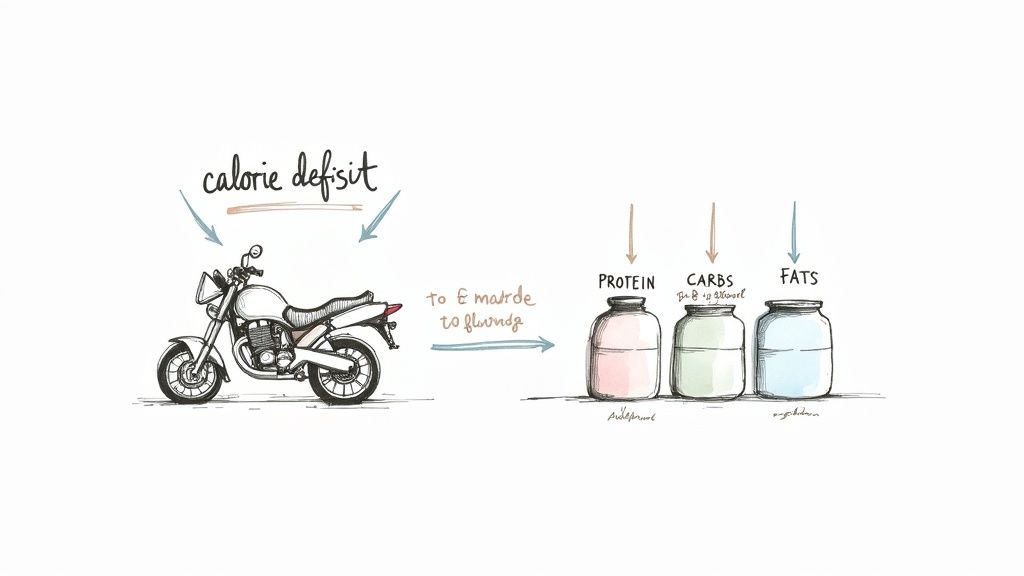
Before we get into the numbers, let's do a quick intro. Macronutrients, or "macros," are the big three nutrients your body relies on for energy and just getting through the day.
If losing weight is your main goal, the one non-negotiable rule is a calorie deficit. Think of that as the engine of your progress. But macros? They're the high-quality fuel that makes the engine perform at its best.
Meet Your Body’s Fuel Team
Each macro has a totally different but equally important job. Once you see how they work together, balancing them starts to feel way less complicated.
- Protein: Think of protein as your body's repair crew. It's essential for building muscle, repairing tissue, and—most importantly for weight loss—keeping you feeling full. That feeling of fullness is your secret weapon against random snack attacks.
- Carbohydrates: Carbs get a bad rap, but they're your body's favorite energy source. They power your brain, fuel your workouts, and help you avoid that 3 PM slump.
- Fats: These are far from the enemy. Healthy fats are crucial for producing hormones, absorbing key vitamins, and providing a long-lasting, steady stream of energy.
The magic isn’t about cutting out an entire food group; it’s about finding a smart balance that works for your body and lifestyle. You’re aiming for mindful choices, not rigid perfection.
This table offers a simple starting point for thinking about each macro when your goal is weight loss.
Quick Guide to Weight Loss Macros
| Macronutrient | Why It Matters for Weight Loss | Good Sources to Start With |
|---|---|---|
| Protein | Keeps you full, reduces cravings, and helps preserve muscle mass while you lose fat. | Lean meats, fish, eggs, Greek yogurt, tofu, beans, lentils. |
| Carbs | Provides the primary energy for workouts and daily activities, preventing fatigue. | Oats, brown rice, quinoa, sweet potatoes, fruits, vegetables. |
| Fats | Supports hormone balance, helps absorb vitamins, and provides sustained energy. | Avocado, nuts, seeds, olive oil, fatty fish (like salmon). |
Remember, this is just a starting point to help you build smart, satisfying meals.
Ultimately, focusing on good macros for weight loss isn't about restriction. It's about making smart choices to give your body the fuel it actually needs. This approach helps you prioritize losing fat, holding onto valuable muscle, and keeping your energy levels up—making the whole journey feel a lot less like a diet and a lot more like a lifestyle. For a deeper dive into the core concepts, this is a great resource for understanding macros for weight loss.
The Role of Protein in Your Weight Loss Goals
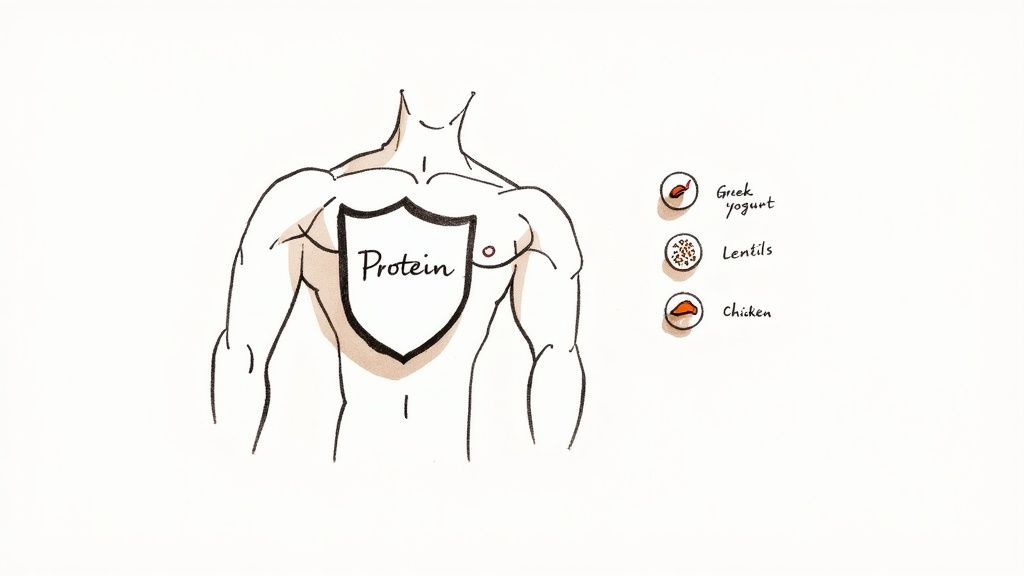
When we talk about the best macros for weight loss, protein is the undisputed champion. It's your secret weapon for making the whole process feel less like a struggle and more like a smart, sustainable plan. Its main superpower? Keeping you feeling full and satisfied long after you’ve put your fork down.
This feeling of fullness, or satiety, is a total game-changer. When you’re not constantly fighting hunger, those random cravings for sugary snacks and late-night raids on the fridge start to fade away. It’s not about willpower; it’s about biology. You’re simply giving your body what it needs to feel content, which naturally helps you eat fewer calories without feeling deprived.
Why Protein is a Weight Loss Powerhouse
Beyond just kicking hunger to the curb, protein has a few other jobs that directly help you lose fat. For starters, it has a higher thermic effect of food (TEF) than carbs and fats. That's just a fancy way of saying your body burns more calories just digesting it. It’s a small boost, but every little bit helps!
Even more importantly, protein acts as a bodyguard for your muscles. When you're in a calorie deficit, your body sometimes breaks down muscle for energy along with fat. Eating enough protein tells your body to preserve that valuable muscle, ensuring the weight you lose is primarily fat. This is key to getting that "toned" look many people are after.
When you prioritize protein, you're not just losing weight; you're reshaping your body by preserving lean muscle mass while shedding fat. This shift in body composition is what leads to lasting results.
Hitting Your Protein Goals Without the Stress
So, how much protein do you actually need? There isn't a single magic number, but a ton of research suggests a higher intake is a huge help for weight loss. A great starting point is to aim for 1.2 to 2.0 grams of protein per kilogram of body weight each day. This range is the sweet spot for feeling full and protecting muscle while you’re losing fat.
Hitting that target is probably easier than you think—and no, it doesn’t mean you have to eat endless plates of plain grilled chicken. For a more detailed look at your personal numbers, our guide on how to calculate your daily protein needs is a great resource.
Here are a few simple, tasty ways to bump up your intake:
- Greek Yogurt: A perfect protein-packed breakfast or snack.
- Lentils and Beans: Plant-based powerhouses that are also loaded with fiber.
- Eggs: Incredibly versatile, affordable, and a great source of protein.
- Cottage Cheese: Another fantastic snack that works well in both sweet and savory dishes.
This is where a casual approach to tracking makes all the difference. Instead of obsessing, you can just tell Munchlog, “I had a Greek yogurt with berries for breakfast,” and instantly see how much protein you've logged. If you find you're still falling a bit short, convenient options like protein shakes and supplements can help fill the gaps. It’s all about being mindful, not perfect.
Finding a Healthy Balance with Carbs and Fats
Carbohydrates and fats have been unfairly demonized in so many diet trends. It's time to set the record straight: they are not the enemy. In fact, they are absolutely essential energy sources your body needs to feel and function at its best.
The secret isn’t to eliminate them, but to be smart with your choices. Think of your body like a car. You wouldn't fill it with cheap, low-grade fuel and expect it to run smoothly, right? The quick sugar high from a candy bar is a totally different kind of energy than the slow, steady fuel you get from a bowl of quinoa. Both are carbs, but one sets you up for an energy crash while the other keeps you going for hours.
The same goes for fats. Healthy fats from sources like avocados, nuts, and olive oil are critical for balancing hormones and absorbing vitamins. When you include these in your diet, your entire weight loss journey just feels better.
Quality Over Quantity Always Wins
It’s easy to get fixated on hitting your macro numbers perfectly, but the source of those macros is just as important as the quantity. Shifting your focus to quality—without becoming obsessive—can completely change your results and how you feel day-to-day.
This isn't just a theory; major studies have found that people who eat mostly high-quality, plant-based carbs and fats tend to gain less weight over time than those who rely on animal fats and refined carbs. You can read the full research about these diet quality findings to see just how powerful this approach is.
So, what does this look like in real life? It means you don't have to banish pasta or bread forever. Instead, you could swap white bread for a hearty whole grain or trade regular pasta for a lentil or chickpea-based version. These simple upgrades deliver way more fiber and nutrients, keeping you full and satisfied.
The goal isn't to create a list of "forbidden" foods. It's about building a plate that energizes you and supports your goals, filled with foods you genuinely enjoy.
Smart Swaps for Better Energy
You don't need a complete diet overhaul to start seeing benefits. It’s all about making small, sustainable swaps that add up over time.
- For Carbohydrates: Instead of a sugary cereal, try a bowl of oatmeal with berries. Swap white toast for a slice of whole-grain bread topped with avocado. These complex carbs digest slowly, giving you a steady release of energy without the spike and crash.
- For Fats: Ditch the heavy, creamy salad dressing for a simple drizzle of olive oil and lemon juice. Instead of grabbing processed snacks, a handful of almonds or walnuts provides healthy fats and protein that will actually keep you full.
Keeping track of these choices is where a voice-logging app like Munchlog.ai can make a huge difference. You can just say, "I had oatmeal with blueberries and walnuts for breakfast," and the app does the work of breaking it down. This casual approach helps you notice your patterns and make better choices without the chore of manual logging, making it that much easier to build habits that last.
How To Find Your Personal Macro Goals
Alright, let's get into the nuts and bolts of setting your own macro targets. Forget complicated formulas and spreadsheets. We're going to find a simple, sensible starting point based on your real life.
The most important thing to remember is that these numbers are a flexible guide, not a rigid set of rules. The best macro plan is always the one you can stick with. A "perfect" plan you quit after three days is useless, but a "good enough" plan you actually enjoy will get you amazing results.
Start With Your Activity Level
How you spend your day is the biggest factor in what kind of fuel your body needs. Are you mostly at a desk, or are you on your feet and hitting the gym regularly? Your activity level helps determine your energy needs.
Here are some common starting points to get you in the right ballpark.
| Activity Level | Protein % | Carbohydrate % | Fat % |
|---|---|---|---|
| Mostly Sedentary (e.g., office job, minimal exercise) | 40% | 30% | 30% |
| Moderately Active (e.g., exercise 3-4 days/week) | 40% | 40% | 20% |
| Very Active (e.g., exercise 5+ days/week, active job) | 30% | 50% | 20% |
These ratios aren't magic—they're just well-tested starting points. If you're mostly sedentary, a balanced split helps manage hunger and energy. If you're more active, bumping up the carbs provides the extra fuel you need for performance and recovery.
Think of your macro ratio as a starting hypothesis, not a permanent diagnosis. You're just gathering data. As you track what you eat, you'll learn what makes your body feel its best, and you can easily tweak your targets right inside an app like Munchlog.
Let’s Put This Into Practice: Meet Alex
Let’s walk through a real-world example. Meet Alex, a busy professional who works at a desk but makes it to the gym three times a week. Alex’s goal is to lose some fat without feeling totally drained of energy for work.
Looking at the table, Alex fits right into the moderately active category and decides to start with a 40% protein, 40% carbs, and 20% fat split. Simple. Now Alex has a clear target.
Instead of stressing over every single gram, Alex just starts logging meals with voice. After breakfast, a quick voice note: "I had two scrambled eggs with spinach and a piece of whole-wheat toast." Munchlog instantly breaks it down. This simple habit helps Alex see where their fuel is coming from and make small, smart adjustments to stay close to those targets.
This decision tree is a great visual for thinking about the quality of your carbs and fats, which is just as important as the quantity.
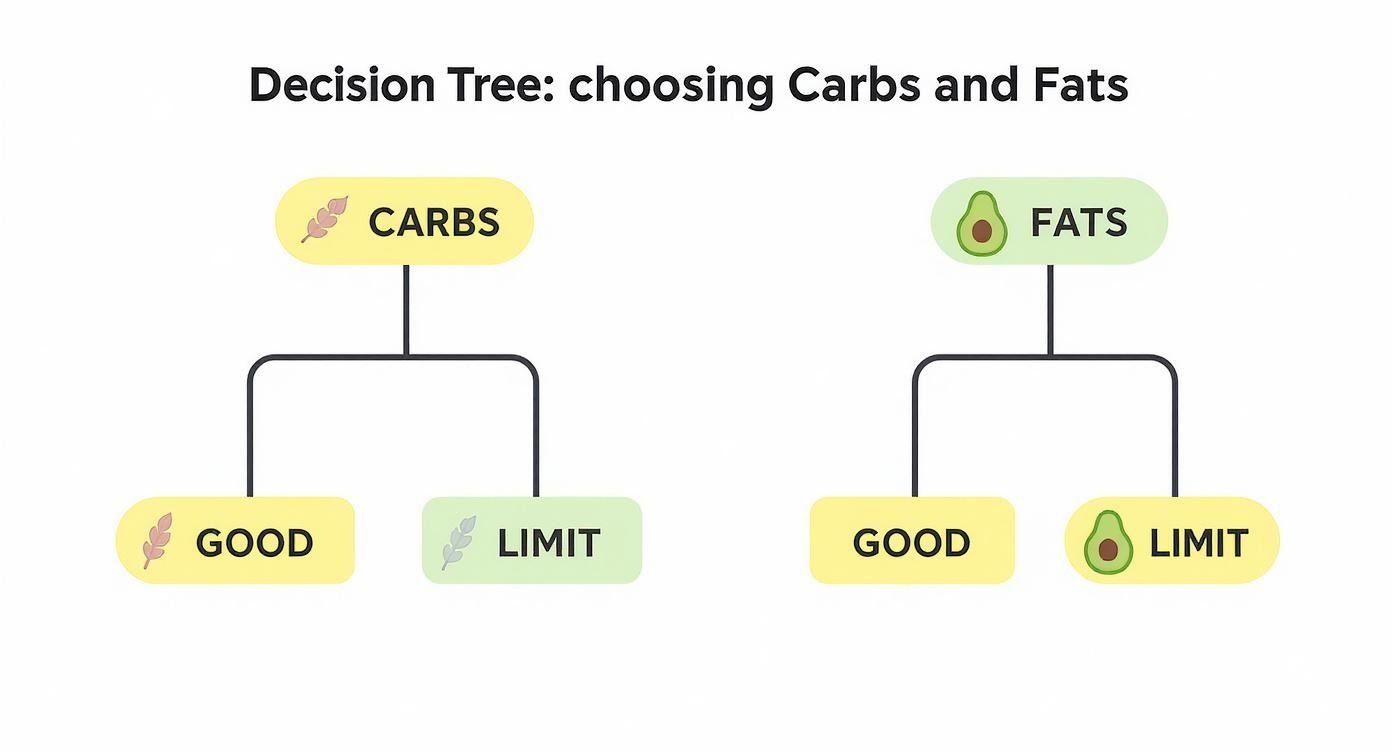
As you can see, prioritizing whole foods over highly processed options is the simplest way to hit your numbers and feel good. This is exactly how Alex approaches it—choosing oatmeal over a sugary pastry or adding avocado instead of a creamy, high-calorie dressing. It’s all about making better choices, not perfect ones.
Effortless Macro Tracking with Your Voice
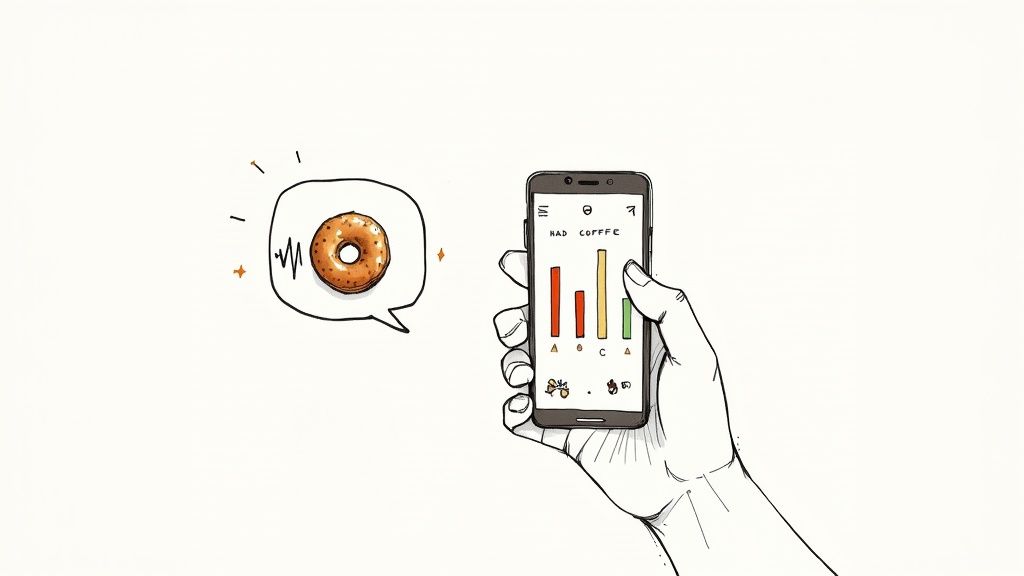
Knowing your macro targets is one thing, but let's be honest—the daily grind of logging every single meal is usually where a new health kick comes to a screeching halt. Manually searching for ingredients, guessing portion sizes, and tapping away on your phone after every snack just feels like a chore.
This friction is the number one reason people give up. Life gets busy, and nobody has time to spend 20 minutes a day playing food detective. But what if tracking your intake was as simple as talking?
Make Tracking a Conversation
This is where the game completely changes. Imagine you’ve just finished breakfast. Instead of fiddling with a clunky app, you just say, "I had a coffee with milk and a bagel with cream cheese." Instantly, the app logs it and breaks down the calories and macros for you.
That’s it. No typing, no searching, no stress. A voice-first approach removes all the tedious steps that make tracking feel like work. It fits seamlessly into your day, whether you're logging a quick snack on the go or a complex homemade dinner.
The goal of tracking shouldn't be perfection. It's about building awareness. When logging is this easy, you get a clear, consistent picture of your eating habits without the obsession.
How It Works in Your Daily Life
This casual approach makes it incredibly easy to stay mindful of your nutrition, even on your busiest days. It's about making good macros for weight loss an achievable goal by simplifying the whole process.
Let's look at some real-world examples:
- Your Morning Rush: As you're heading out the door, you can quickly say, "Log a protein shake with almond milk and a banana." Done.
- A Homemade Dinner: No need to log every single ingredient in your famous chili recipe. Just say, "I had a bowl of homemade beef chili with cheese," and let the AI handle the estimation.
- Snacks on the Run: Grabbed a handful of almonds from the pantry? A quick voice note—"I had a handful of almonds"—is all it takes.
By turning food logging into a simple conversation, you can stay on top of your goals without feeling overwhelmed. It becomes a sustainable habit, not another task on your to-do list. If you want to see how this compares to traditional methods, check out our thoughts on finding a simple food diary app that actually works for a busy lifestyle.
Moving Past the Numbers: The Real Keys to Lasting Success
Getting your macro ratios right is a fantastic starting point, but it's easy to get tunnel-vision, obsessing over percentages while losing sight of what really matters. Think of your macros as the directions on a GPS—they're useful for getting you to your destination, but they don't tell you anything about the quality of the road you're driving on.
For a journey that actually lasts, you have to look at the whole picture. The quality of your food, your body's unique signals, and your overall eating habits are the true foundation for sustainable fat loss. This shift in thinking is what moves you from a rigid "diet" to a more mindful way of eating. It’s less about hitting perfect numbers and more about building a healthy, enjoyable relationship with food.
What Actually Drives Results
Instead of getting bogged down by hitting exact percentages, zoom out and focus on these core principles. These are the habits that make the biggest difference in both results and how you feel day-to-day.
Prioritize Food Quality: The calories from a fresh avocado don't act the same in your body as the calories from a bag of chips. Fill your plate with whole, minimally processed foods like lean proteins, colorful fruits and veggies, and whole grains. They provide the vitamins, minerals, and energy your body is actually craving.
Make Fiber Your Friend: Fiber is a game-changer for weight loss. Foods rich in fiber—think beans, lentils, oats, and berries—keep you feeling full and satisfied for hours. This makes sticking to a calorie deficit feel effortless rather than like a constant battle against hunger.
Learn to Trust Your Body's Signals: Your body is smarter than any app. Pay attention to your real hunger and fullness cues. Some days, especially after a tough workout, you'll naturally need more fuel. On other days, you might need less. Honoring those signals is crucial for long-term balance.
Ultimately, the "best" diet isn't the one with the perfect macro split. It's the one you can actually stick with because it's satisfying, flexible, and makes you feel good.
This isn't just friendly advice; it's backed by solid research. Many studies have shown that the exact ratio of macros is a surprisingly poor predictor of long-term weight management. What is a strong predictor? Eating patterns high in fiber from whole grains, fruits, and vegetables are consistently linked to less weight gain over time. If you want to dive into the science, you can explore studies on dietary patterns and weight control and see for yourself how quality often wins out over simple quantity.
At the end of the day, using a tool like Munchlog.ai isn't about enforcing a set of rigid, unforgiving rules. It’s about building awareness. It gives you the data to understand your habits and make smarter, more informed choices, all while encouraging consistency over perfection.
Frequently Asked Questions About Macros
Still have a few questions buzzing around? That’s completely normal. Let’s tackle some of the most common hurdles people face when they first start counting macros.
What If I Go Over My Macro Targets for a Day?
First off, don’t sweat it. One day of going over your numbers won't undo all your hard work. Think of it like this: your progress is built on the average of your habits over weeks and months, not on a single 24-hour snapshot.
The key is consistency, not perfection. Just get back on track with your next meal. Avoid the temptation to drastically slash calories the next day to "make up for it"—that's a surefire way to get stuck in a frustrating cycle of restriction and bingeing.
How Do I Track Macros When Eating Out?
Dining out doesn't have to be a macro-tracking minefield. Most big chain restaurants post their nutrition information online, which takes the guesswork out of the equation.
For smaller, local restaurants, you just have to become a good estimator. Break the meal down in your head: what are the main components? Is it a lean protein like grilled chicken, a heavy carb source like a big bowl of pasta, or a fat-dominant dish with a creamy alfredo sauce?
Remember, the goal of casual tracking is awareness, not clinical precision. A good estimate is far better than not logging at all. It keeps you mindful of your choices without sacrificing your social life.
Do I Absolutely Need a Food Scale?
Honestly, it depends on your goals. A food scale is a fantastic tool for getting a precise measurement, especially when you're first learning what real portion sizes look like. It can be a real eye-opener.
But is it a deal-breaker? Absolutely not. For a more laid-back approach, you can use your hands as a guide. A palm-sized portion for protein, a cupped hand for carbs, and a thumb-sized serving for fats is a simple, effective way to stay on track without the extra hardware.
Ready to stop guessing and start tracking effortlessly? munchlog.ai lets you log your meals just by talking. Give it a try and see how simple mindful eating can be. Learn more at https://munchlog.ai.