
How many calories in a slice of pineapple? A quick guide for easy tracking
How many calories in a slice of pineapple? Find exact counts for fresh, canned, and grilled pineapple, plus simple tips to track it in your meals.
Posted by
 Munchlog
Related reading
How Many Calories in Bread and Butter? (It's More Than You Think)
Curious about calories in bread butter? This clear guide breaks down the numbers for different bread types and shows you how to track snacks with ease.
How to Count Calories Without the Stress
Learn how to count calories easily with practical, mindful tracking tips for sustainable progress toward your goals.
Your Simple Guide to Using a Macro Calorie Tracker
Learn how a macro calorie tracker can help you understand your diet without the stress. Track protein, carbs, and fats to reach your wellness goals easily.
Trying to figure out how many calories are in that slice of pineapple? It's way simpler than you might think. A typical fresh slice—the kind you’d get from a standard-sized pineapple (about 3.5 inches across and ¾ of an inch thick)—comes in at around 40 calories. It’s a nice, simple number that makes logging this tropical treat a breeze.
Your Quick Guide to Pineapple Calories
Let's cut to the chase. You're here for the numbers so you can log your food and get back to your day. We totally get it—calorie tracking should feel effortless, not like a pop quiz every time you eat.
So, we've put together a handy cheat sheet for all things pineapple. Whether you're enjoying a juicy fresh slice, a ring from a can, or a cup of chunks, this guide will help you estimate your portion with confidence.
What we think of as a "standard" slice of pineapple—roughly 3.5 inches in diameter and 0.75 inches thick—is what most nutrition databases use. This serving size consistently lands in the 40-42 calorie range, making it a reliable benchmark for tracking.
Pineapple Calories at a Glance
For a quick side-by-side look, here’s how different pineapple servings compare. Having these numbers in your back pocket makes logging a breeze, especially if you're using a tool like munchlog.ai where you can just say what you ate.
Here's a quick reference table to make things easy.
| Pineapple Serving | Estimated Calories |
|---|---|
| 1 Fresh Slice (3.5" x 0.75") | ~40 calories |
| 1 Canned Ring (in juice) | ~25 calories |
| 1 Cup, Chunks (fresh) | ~82 calories |
| 1 Canned Slice (in heavy syrup) | ~35 calories |
Think of these as solid starting points. Getting familiar with portion estimates like these is a huge help, much like understanding the basics of calories in a fruit bowl. It's all about making informed choices without the stress.
When you bite into a juicy slice of pineapple, what are you actually eating? Beyond that burst of tropical flavor, knowing the nutritional nuts and bolts can make logging your food feel less like a chore and more like a mindful choice.
Let's break it down. At its core, pineapple is made up of carbohydrates and water. Those carbs are the good kind—natural sugars like fructose, glucose, and sucrose that give the fruit its signature sweetness. If you're watching your fat intake, you're in luck; pineapple is a naturally fat-free snack, making it a super light and easy choice.
Beyond the Basic Building Blocks
While pineapple won't be your go-to for protein, its real strength is in the micronutrients. Think of it as a small, delicious boost to your daily health, with benefits that go way beyond just energy.
For a little perspective, a single cup of pineapple chunks packs a serious nutritional punch. You're getting 78.9 milligrams of vitamin C—that’s a whopping 88% of your daily value—plus essential minerals like potassium and copper. It also contains bromelain, a unique enzyme known for helping with digestion. You can dive deeper into the full nutritional profile of pineapple over on FoodStruct if you're curious!
Knowing what's in your food makes logging it so much more powerful. Realizing that your pineapple snack is also a huge source of Vitamin C can make tracking feel more rewarding and less about just crunching numbers.
A Quick Recap for Your Log
So, what does this all mean when you go to track your snack? When you add "one slice of pineapple" to an app like munchlog.ai, you’re not just entering a calorie count. You're noting a food that is:
- Mainly Carbs: Giving you a source of quick, natural energy.
- Virtually Fat-Free: A light option that fits effortlessly into any eating plan.
- A Micronutrient Powerhouse: Loaded with Vitamin C for immune support and manganese for a healthy metabolism.
Framing it this way helps turn the simple act of food logging into a mindful moment of self-care.
Comparing Fresh, Canned, and Frozen Pineapple
Grabbing pineapple from the pantry or freezer is super convenient, but it's good to know that they aren't all the same when it comes to calories. The trip a pineapple takes from the field to a can or a freezer bag can change its nutritional makeup, mostly due to added sugars.
Fresh pineapple is your starting point—it's pure, unadulterated fruit. What you see is what you get, with all its natural sweetness and nutrients locked in. Canned options, however, introduce a variable: the packing liquid.
The Impact of Added Sugars and Packing Liquid
Pineapple packed in its own juice is a great choice because it keeps the added sugar to a minimum. But if you see "heavy syrup" on the label, heads up. That's code for a significant dose of extra sugar, which bumps up the calorie count in every single slice.
Frozen pineapple chunks are often a fantastic middle ground. They're usually just the fruit, flash-frozen when perfectly ripe, with nothing else added. This makes them ideal for smoothies, preserving most of the good stuff without any unwelcome sugars. The golden rule? Always check the label.
As you can see, the natural carbs from sugar are a big part of pineapple's profile, but it also packs a serious nutritional punch.
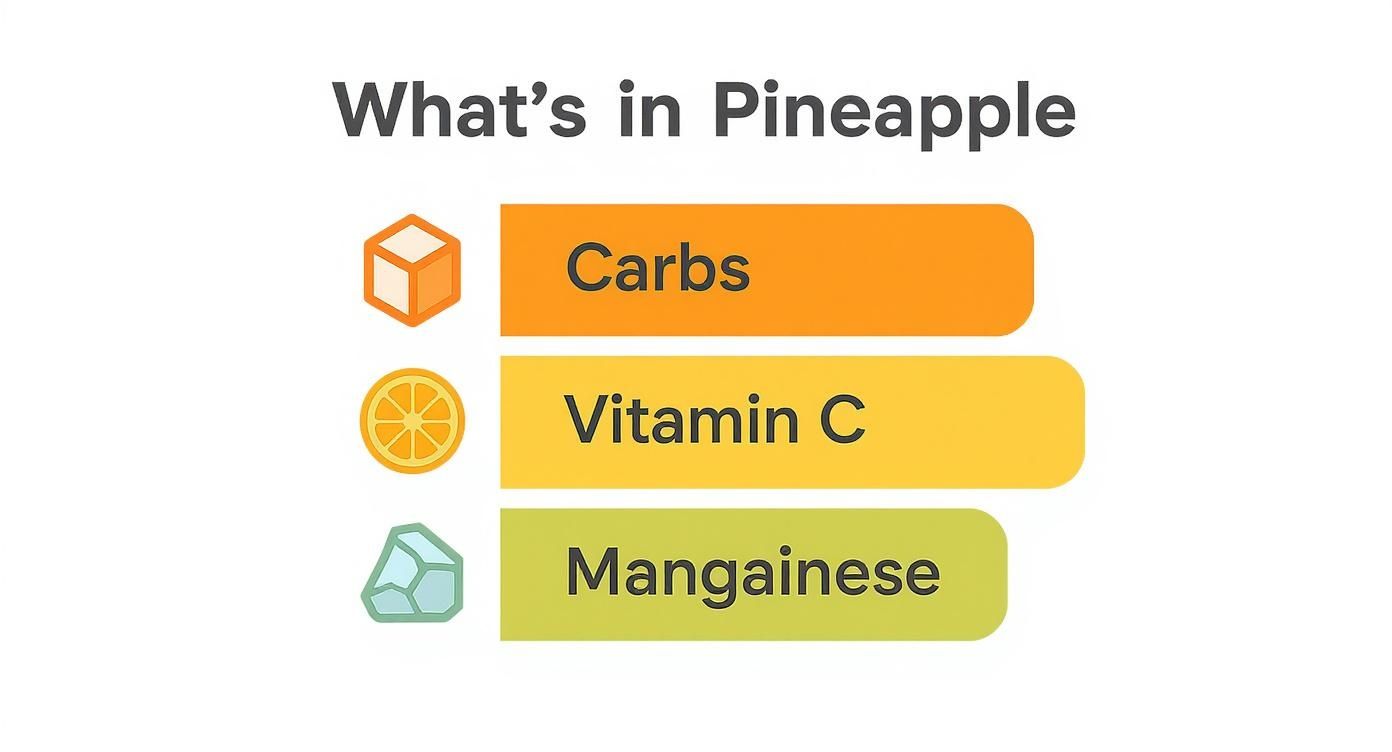
This just goes to show it's not only about calories; you're also getting a great shot of Vitamin C and manganese.
Calorie Comparison: Fresh vs. Canned Pineapple
Let's break down how the calories stack up side-by-side. This table gives you a quick snapshot of what to expect when you're choosing between fresh and canned pineapple.
| Type of Pineapple Slice | Estimated Calories | Key Difference |
|---|---|---|
| Fresh Pineapple Ring (1/2" thick) | 40-50 calories | The baseline, with only natural fruit sugars. |
| Canned in Juice (1 ring) | 30-35 calories | Slightly fewer calories, often thinner slices. |
| Canned in Heavy Syrup (1 ring) | 60-70 calories | Nearly double the calories due to added sugar. |
The takeaway here is pretty clear: the liquid your pineapple is packed in makes all the difference. Choosing pineapple in its own juice over heavy syrup is one of the easiest ways to cut down on hidden sugars without giving up the convenience of canned fruit.
When considering canned goods, it also helps to be mindful of the packaging itself. It's always a good idea to seek out cans with labels that mention understanding BPA-free packaging.
The biggest takeaway? The liquid matters. A slice of pineapple swimming in heavy syrup can have nearly double the sugar of one packed in its own natural juice. That's a difference worth noting for your daily log.
This is exactly where casual tracking is so helpful. Simply saying, "I had two pineapple rings in heavy syrup" into an app like munchlog.ai gives the AI enough context to make a much smarter calorie estimate. It’s an effortless way to be more accurate without getting bogged down in tiny details.
Eyeballing Pineapple Portions Without a Scale
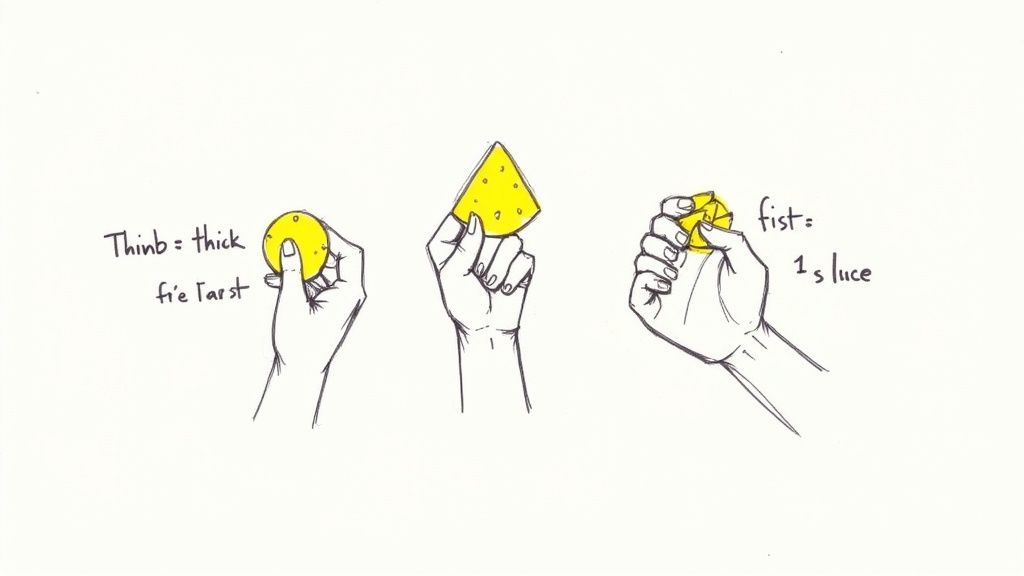
Let's be real. Most of us aren't bringing a food scale to a backyard barbecue or a beach picnic. The good news? You don't have to. You can get a solid calorie estimate for your pineapple with just a few simple visual tricks.
This is where "eyeballing it" becomes your superpower. Instead of stressing over exact grams, you can use real-world comparisons to make a quick, confident guess. This approach is all about being mindful without letting tracking take over your life, which is exactly our philosophy at munchlog.ai.
The goal is consistency, not clinical precision. A good estimate that you log every time is far more valuable than a perfect measurement you only do once in a while.
Quick Visual Rules for Pineapple
Next time you grab a piece of pineapple, try these easy-to-remember rules of thumb. They're surprisingly accurate for on-the-fly logging.
- Pineapple Slices: A typical slice is about the thickness of your thumb. If you hold your thumb next to it, it should be a close match. This is your cue for a slice in the 40-50 calorie ballpark.
- Pineapple Chunks: A loosely closed fist is roughly the size of one cup. So, a handful of chunks that fits comfortably in your palm is likely around a cup, which nets out to about 82 calories.
- Canned Rings: These are almost always thinner than fresh-cut slices. Think of them as being about the thickness of a smartphone.
Getting the hang of these visuals makes logging with your voice incredibly fast. You can just say, "I had a thumb-thick slice of pineapple" into munchlog.ai and let the AI handle the rest.
While a scale is a fantastic tool for learning portion sizes (and you can learn more about tracking without a food scale here), it’s not something you need to be chained to. Learning to estimate freely is an empowering skill that makes healthy eating feel more natural and a lot less like a math test.
Logging Pineapple in Seconds with Your Voice
Now that you’ve got a handle on eyeballing portions, let's talk about making the tracking part ridiculously easy. This is where the magic happens—using your voice to log what you eat. It turns a chore into a simple, two-second conversation. Forget about typing, scrolling through databases, and messing with complicated app menus.
With munchlog.ai, you just say what you ate. It's built to understand how people actually talk about food, so you don't need to be a nutritionist to get it right. The AI figures out the calories and macros from your description, which is the whole point of an easy food tracking app.
How It Works in Real Life
Picture this: you've just finished a snack. Instead of picking up your phone, unlocking it, opening an app, and starting to type, you just… talk.
Here’s a glimpse of how you’d log those pineapple snacks we’ve been talking about.
The whole idea is to capture what you say and turn it into a nutrition entry without any friction.
Here are a few real-world examples of what you could say:
- For a simple snack: "I had one slice of fresh pineapple."
- For the canned stuff: "Logged two canned pineapple rings in juice with lunch."
- For a mixed meal: "I had a bowl of Greek yogurt with about a half cup of pineapple chunks."
The real win with voice logging is how fast and effortless it feels. You're just describing your meal like you would to a friend, which makes it so much easier to stay consistent. It becomes second nature.
This conversational style just melts away the friction of food logging. It fits right into your day, whether you're at your desk, in the car, or just clearing your plate at home.
A Few Final Questions About Pineapple
People are always curious about pineapple and how to fit it into their eating habits. To round things out, here are some quick answers to the questions we hear most often.
Do Ripe Pineapples Have More Calories?
Technically, yes, but just barely. As a pineapple ripens on your counter, its starches break down into simple sugars, which is why it gets that incredibly sweet, tropical flavor. Sugar is slightly more calorie-dense than starch.
But let's be realistic—the difference is so minor it’s not worth worrying about for your daily log. An extra-ripe, juicy slice might have a couple more calories than a tarter one, but for tracking purposes, our estimates will get you right where you need to be.
What About Pineapple Juice? Is It Healthy?
While it comes from a healthy fruit, pineapple juice is a different beast altogether. The juicing process removes nearly all the beneficial fiber, which is what helps you feel full and keeps your blood sugar from spiking.
What you're left with is a concentrated dose of sugar. A single 8-ounce glass can easily have over 130 calories and 25 grams of sugar. You’re almost always better off eating the whole fruit. If you do crave some juice, just be sure to log it accordingly.
How Does Pineapple Fit Into a Healthy Diet?
Pineapple is a fantastic choice for a balanced lifestyle. It’s naturally low in calories, has zero fat, and is loaded with Vitamin C and manganese. Plus, its natural sweetness is a great way to satisfy a sweet tooth without reaching for candy.
Pineapple is one of the most versatile fruits out there. Toss it in a salad, blend it into a smoothie, add it to your morning yogurt, or just eat it fresh. It’s a delicious, nutrient-packed food.
Is It Okay to Eat Pineapple Every Day?
For sure! A daily serving of pineapple can be a great way to hit your nutrient goals. It even contains bromelain, an enzyme that can aid digestion for some people.
The trick is simply to keep portion sizes in check—a single ring or a cup of chunks is a perfect amount. As long as you’re eating a varied diet, a daily pineapple fix is a healthy habit. It's all about finding what works for you.
Ready to make logging this simple for everything you eat? With munchlog.ai, you just talk to log your food. Ditch the typing and start tracking the easy way. Get started with munchlog.ai today!