
How to Stay Consistent with Your Diet (Without Giving Up Pizza Night)
Struggling with how to stay consistent with diet? Learn simple strategies to enjoy your favorite foods and build healthy habits that actually last.
Posted by
 Munchlog
Related reading
How to keep a food log when calorie tracking makes you quit
A gentle guide to keeping a food log when calorie tracking makes you quit. Low-friction strategies and how a voice-first app like Munchlog can help.
Calories in Purple Onions and How to Track Them Stress-Free
Discover the calories in purple onion (raw vs cooked) and learn simple, stress-free ways to track them for a balanced diet. Your guide to mindful eating.
What Do Net Calories Mean? A Super Simple Guide
What do net calories mean for you? Learn how to calculate them, why they matter for casual food tracking, and how to understand your daily energy balance.
If you've ever wondered how to stay consistent with your diet, it boils down to one simple shift: focusing on progress, not perfection. It's not about having flawless willpower. Instead, it’s about building a flexible system that can handle life’s curveballs and keep you moving forward, one meal at a time.
Why Consistency Feels Impossible (And How to Fix It)
Let's be real—sticking to a new way of eating is tough. If you've ever felt like a failure after one "off-plan" meal, you’re not alone. The problem isn't you; it's the all-or-nothing mindset that so many diets accidentally teach us.
This is the mindset that turns a single cookie into a full-blown "cheat day," making you feel like all your progress is gone. But what if one meal was just... one meal? Real consistency isn't about a perfect streak. It’s about getting right back on track at your next meal, not waiting for Monday to start over.
The Real Roadblocks to Staying Consistent
Life is messy and unpredictable. Trying to force rigid rules onto the chaos of daily life just leads to frustration. Even with the best intentions, everyday situations can throw you off course.
Here’s why most of us stumble:
- Decision Fatigue: After making a million choices all day, your brain is tired. The last thing you have energy for is figuring out what’s for dinner.
- Unexpected Social Plans: That last-minute happy hour or a friend’s birthday dinner can feel like a pop quiz, forcing you to choose between your goals and your social life.
- Emotional Triggers: Stress from work, boredom on a slow afternoon, or even the joy of a celebration can all trigger cravings for foods that don’t quite fit your goals.
The key is to stop seeing these moments as failures and start seeing them as learning opportunities. Each one is a chance to understand your personal roadblocks and build a plan that works with your life, not against it.
Instead of fighting your routine, build a more flexible approach. Always reaching for a sugary snack around 3 PM? Don't just white-knuckle it. Plan ahead by having a protein-rich snack ready. By understanding your patterns, you take back control, one small, smart choice at a time.
Build Your Consistency Blueprint One Small Habit at a Time
Big, dramatic diet overhauls are exciting for about a day. But lasting consistency isn't built on willpower. It's built on small, repeatable actions that feel almost too easy not to do. We're not creating a rigid rulebook; we're creating a blueprint for momentum.
Forget the all-or-nothing mindset. Instead, pick one simple, achievable goal for this week. It’s not about hitting perfect macros on day one. It’s about proving to yourself that you can follow through, building that trust one tiny promise at a time.
Start with One Easy Win
The secret is to make your first step so small it feels silly not to do it. Think about your biggest struggle with food, then identify the smallest possible action you can take to move in the right direction.
Here are a few real-world examples:
- Just Log Breakfast: Don't worry about lunch or dinner yet. For the next seven days, just log your first meal of the day. That’s it.
- Hit a Protein Target: Maybe you want to eat more protein. Set a manageable goal, like getting 20 grams of protein with your lunch each day.
- Prep Just One Thing: The thought of a full Sunday meal prep can be overwhelming. So don't do it. Instead, just cook a big batch of chicken or a pot of quinoa to have ready in the fridge. That one step makes throwing together a healthy meal ten times easier.
These tiny habits create a powerful ripple effect. They chip away at decision fatigue and slowly make the healthier choice the easier choice.
Your goal isn't to become a meal-prepping superstar overnight. It's to build a routine that feels as automatic as brushing your teeth. Small, consistent actions are the only way to build long-term success.
To keep the momentum going, many people find that using dedicated habit tracking apps can be a huge help. There’s something motivating about seeing a streak of checked-off days build up.
Make Tracking Part of the Routine
New habits stick when you connect them to old ones. It's a concept called habit stacking. If you want to remember to log your food, tie that action to something you already do without thinking.
A simple habit stack might sound like: "Right after I finish my morning coffee, I will log my breakfast."
This is where voice logging completely changes the game. Instead of the usual routine—pulling out your phone, unlocking it, opening an app, typing, and searching—you can just make it part of the conversation.
With munchlog.ai, the whole process feels less like a chore and more like a quick, natural check-in. Just say, "I had two scrambled eggs and a piece of toast." The AI takes care of the rest, turning a tedious task into a five-second action. This removes nearly all the friction, making it incredibly easy to stay consistent, even on your most chaotic days.
Make Food Tracking Effortless, Not Exhausting
If logging what you eat feels like a second job, you’re just not going to do it. The real secret to staying consistent with your diet is making the process feel less like a chore and more like a quick, painless check-in. This all comes down to removing friction.
Think about the old way of tracking. You have to unlock your phone, find the app, type in every ingredient, and sift through a database. It’s a pain, and when life gets busy, it’s the first habit to go. This friction is why so many people fall off track.
From Obsessive Counting to Casual Awareness
The goal here isn't to become a perfect calorie-counting robot. It’s about building a relaxed, casual awareness of your eating habits so you can make small, smart adjustments on the fly. When tracking is fast and seamless, you get all the insights without the stress of manual entry.
This simple blueprint breaks it down. You start with a clear goal, do a little prep, and then track your progress without the hassle.
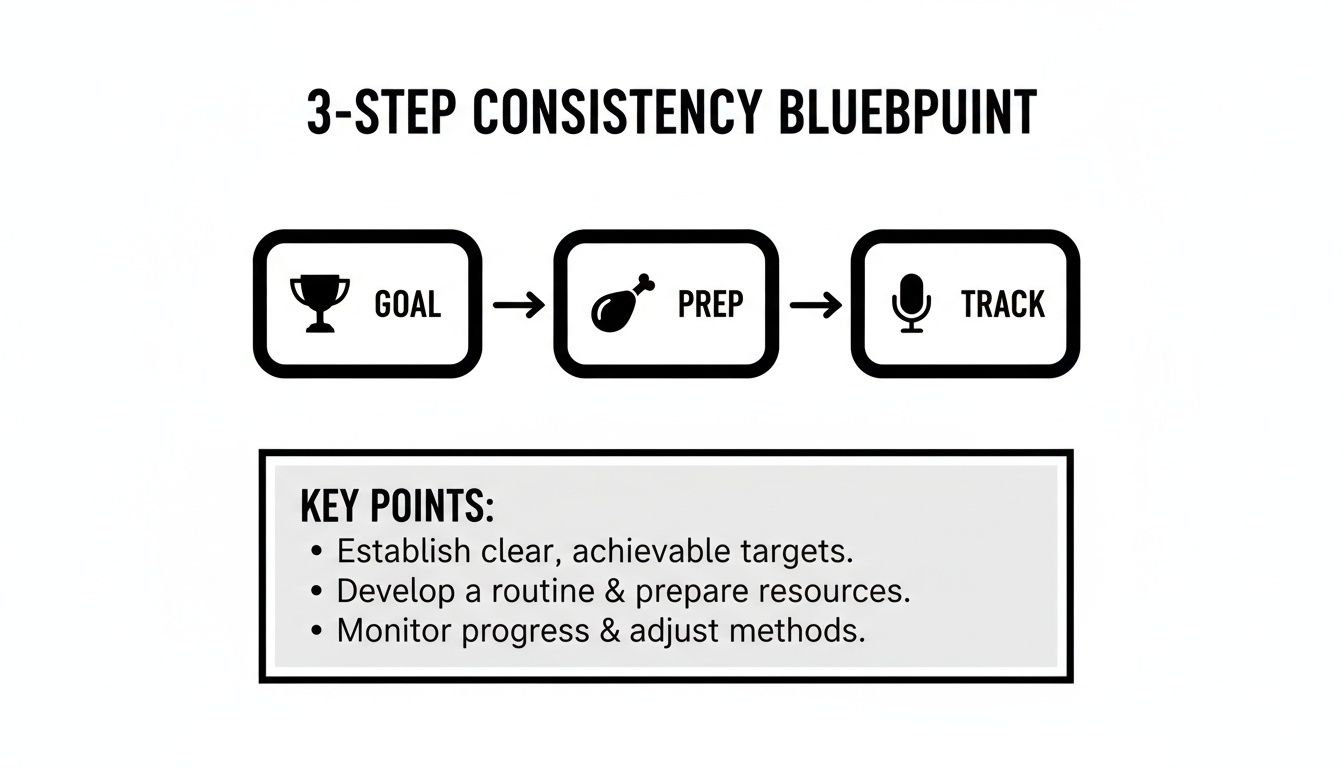
As you can see, tracking is the critical piece that connects your daily actions to your bigger goal. It creates a feedback loop that keeps you motivated and moving forward.
This is where voice logging changes everything. Instead of typing, you just talk. With an app like munchlog.ai, you can simply say, “I had coffee with milk and a banana,” and let the AI figure out the rest. It shifts the entire experience from an exhaustive task to a simple, two-second habit.
The best tracking method is the one you actually stick with. By eliminating the manual work, you make consistency the easiest option.
To see just how different the experience is, let's compare the old way with the new.
Manual Tracking vs. Voice Logging with munchlog.ai
Here's a side-by-side look at how traditional food logging stacks up against modern, voice-first AI tracking.
| Feature | Manual Tracking (Traditional Apps) | Voice Logging (munchlog.ai) |
|---|---|---|
| Data Entry | Time-consuming typing and searching through databases. | Quick, natural language voice input. Just speak. |
| Speed | Can take several minutes per meal to log accurately. | Takes only a few seconds. |
| Friction | High. Multiple steps are required for each entry. | Extremely low. Open the app and talk. |
| Accuracy | Requires precise measurements and brand selection. | Uses AI to provide a "good enough" estimate from your description. |
| Consistency | Difficult to maintain during busy days or social events. | Easy to do anywhere, anytime, without disrupting your flow. |
The difference is clear. One method demands your time and focus, while the other fits seamlessly into your life.
Real-World Scenarios Made Simple
Let's look at how this works in real life, where meals aren't always simple or perfectly measured.
- The Homemade Meal: You made a big batch of chili. Instead of entering all 10 ingredients, just say, "I had a bowl of homemade chili with ground turkey and beans." The AI estimates the macros from your description, giving you a solid idea without the headache.
- The Office Snack: You grabbed a bag of pretzels from the vending machine. Log it by saying, "I ate a small bag of pretzels." Done. It's about acknowledging the snack, not spending five minutes finding the exact brand.
- The Restaurant Dinner: Out with friends and ordered the salmon with roasted vegetables? Log it just like that: "I had grilled salmon with roasted asparagus." You get a reasonable estimate that keeps you mindful without pulling you out of the moment.
By making logging this easy, you’re far more likely to do it consistently. And that steady stream of information—even if it's not clinically precise—is what helps you spot patterns, understand your habits, and stay on track.
If you want to dive deeper into what makes a tracking app truly work for a busy lifestyle, check out our guide on finding the best easy food tracking app for your needs.
How to Handle Social Events and Cravings Without Feeling Guilty
One of the biggest myths about dieting is that you have to give up your social life. The idea that you have to choose between hitting your goals and enjoying time with friends is what sets most people up to fail.
Real life is filled with birthday parties, happy hours, and last-minute dinner invitations. These moments are what make life fun, and they absolutely do not have to torpedo your progress.
The trick is to stop thinking in black-and-white terms. It’s not about avoiding these situations; it's about learning how to walk into them with a smart, flexible game plan. This is how you master staying consistent with your diet when life happens.
Adopt an 80/20 Mindset
Forget about being perfect. Perfection is a recipe for burnout. Instead, start thinking about your week with the 80/20 rule.
The idea is simple: If you're on point with your nutrition 80% of the time, that remaining 20% gives you all the breathing room you need for a slice of birthday cake or that amazing pasta from your favorite restaurant. This isn't a "cheat meal." It’s planned flexibility, and it’s the key to making this last.
One of the best pro moves? Take two minutes to check out the restaurant’s menu online before you go. Spot a couple of solid, protein-forward options. That tiny bit of prep work helps you make a solid choice before you're hangry.
True consistency isn't about a perfect streak. It’s about enjoying life's moments and immediately getting back on track at the next meal—no drama, no guilt.
Turn Your Cravings Into Data
Cravings happen. It's just part of being human. But instead of seeing them as a weakness to fight, start treating them like valuable information. A craving is just a signal. Maybe you're dehydrated, bored, stressed, or hey, maybe you just really want that brownie.
Whatever the reason, the best thing you can do is log it. No judgment.
Let's say you eat two slices of pepperoni pizza. Just open up munchlog.ai and say, "I had two slices of pepperoni pizza." In a few seconds, it’s logged, and you can see where that puts you for the day.
This simple act does two critical things:
- It kills the guilt. When you log it, you own it. It’s not a secret anymore; it's just a data point. The emotional power it has over you vanishes.
- It puts you back in control. Now you can see how those slices affect your daily numbers. Maybe you decide on a lighter dinner, or you make a point to hit the gym tomorrow. You’re making an informed choice, not an emotional one.
Getting a handle on how different foods contribute to your daily totals is a game-changer. If you want to dive deeper, learning what is a macro diet can give you an incredible framework for building this kind of flexibility into your plan. It helps you shift from a "good vs. bad" food mentality to seeing everything as part of a bigger puzzle.
Plan Ahead to Outsmart Your Busiest Days
Let’s be honest: consistency isn’t about having superhuman willpower, especially when your calendar is packed. It’s about having a smart system that makes the healthy choice the easy choice. A little planning is your secret weapon against the chaos of a busy week.
When you're exhausted and hungry after a long day, the path of least resistance usually leads to takeout or processed snacks. A simple meal plan is a favor to your future self, removing the guesswork right when you’re most vulnerable.
Keep Your Plan Simple and Realistic
Meal planning doesn't have to mean spending your entire Sunday cooking elaborate meals. In fact, overcomplicating things is the fastest way to quit. The goal is to create a loose framework, not a rigid set of rules that will shatter the second your schedule changes.
Start small. Just plan out your dinners for the week. This one simple step can head off countless impulsive food choices. To get a better handle on this, you can explore various effective meal planning strategies that make healthy eating decisions feel automatic.
Consistency is created before you're hungry. A few minutes of planning today prevents a rushed, unhealthy decision tomorrow.
This proactive approach mirrors findings in global food reports, which show that access and affordability drive what people eat. By planning ahead with a "budget" of healthy, prepped meals, you're better equipped to handle your own version of daily chaos, like a stressful day that usually triggers impulse buys.
Build Your Week Around Staples
You don't need a brand-new, gourmet recipe for every meal. The most sustainable plans are built around a core set of affordable, nutrient-dense staples you can easily mix and match. This strategy slashes the mental load and keeps your grocery list simple.
Here’s what a simple weekly template could look like:
- Protein Power: Cook a large batch of something versatile like shredded chicken, ground turkey, or chickpeas. You can toss it into salads, tacos, or pasta throughout the week.
- Go-To Grains: Keep a container of cooked quinoa, brown rice, or whole-wheat pasta in the fridge. These are the perfect base for a quick, filling meal.
- Prepped Veggies: Chop up your favorites like bell peppers, onions, and broccoli. Having them ready makes it a breeze to throw them into a stir-fry or an omelet.
This “component prep” style gives you incredible flexibility. You aren’t locked into eating chili on Tuesday if you’re suddenly craving something else. Instead, you have the building blocks for a healthy meal ready to go in minutes.
And the best part? When you already know what you’re eating, logging it becomes almost effortless. With munchlog.ai, you can just say, “I had my usual chicken and quinoa bowl for lunch,” and you’re done. This seamless loop reinforces your plan without feeling like a chore.
For a deeper dive into creating your first plan, our guide to meal planning for beginners has everything you need to get started.
Answering Your Questions About Diet Consistency
Even with the best game plan, questions will pop up. Sticking with a new eating style is a personal journey, and hitting a few roadblocks is completely normal. Let's tackle some of the most common questions people have when they're trying to get the hang of consistency.
"What’s the Best Way to Start if I’ve Failed Before?"
If you feel like you've tried and failed a dozen times, the problem was likely the plan, not you. Most diets are too extreme, too fast. Let's forget everything you've done before and try a simple three-step restart.
- Pick one tiny goal. Seriously, just one. Don't try to overhaul your life overnight. Just commit to logging your breakfast every day for one week. That's it.
- Focus on awareness, not perfection. The point isn't to eat a "perfect" meal. Just log what you ate, without judgment. The real goal is building the habit of checking in with yourself.
- Celebrate the small win. Did you log your breakfast today? Awesome. That's a success. Acknowledging these tiny victories builds the momentum you need to keep going.
This approach takes the pressure off. It proves to you that you can succeed, rebuilding that trust in yourself one small action at a time.
"How Do I Track My Food When I Eat Out a Lot?"
This is a big one. Eating out doesn't have to derail your progress. The secret is to get comfortable with estimation and let go of the need for perfect accuracy. You won't have a food scale at a restaurant, and that's okay.
Instead of getting stressed, just describe what's on your plate. With a tool like munchlog.ai, you can simply say, "I had the grilled chicken sandwich with a side salad." The AI does the heavy lifting, giving you a solid estimate of the calories and macros. That's more than enough to keep you mindful.
The goal isn’t clinical precision; it’s casual awareness. A good-enough estimate is infinitely better than not logging at all because you’re chasing perfection.
"Do I Have to Track My Food Every Single Day Forever?"
Absolutely not. Think of daily tracking as a learning phase. You're basically getting to know your own body, gathering data and developing an intuitive sense for portion sizes and what different meals "cost" in your daily nutrition goals.
After a while, you'll find you don't need to log every bite to stay on track. Many people eventually shift to a more relaxed approach. They might log for a few days every couple of weeks just to recalibrate and make sure their habits are still aligned with their goals. Tracking becomes a tool you can pick up whenever you need it, not a lifelong chore.
"What if I Have a Really Bad Day?"
First off, take a deep breath. One "bad" day of eating doesn't undo weeks of good habits. It just doesn't work that way.
The most important thing you can do is show yourself some grace and get right back to your plan with your very next meal. Don’t wait for Monday. Don’t try to punish yourself with a brutal workout. Just log it, accept it, and move on.
Ready to make consistency finally feel easy? With munchlog.ai, you can track your food in seconds just by speaking. It turns a tedious chore into a simple, two-second habit. Start building a better relationship with food without all the stress by checking out https://munchlog.ai today.