
Mixed Nuts Nutritional Value Made Simple
Discover the mixed nuts nutritional value in your favorite snack. Learn about calories, protein, and healthy fats in this simple, friendly guide.
Posted by
 Munchlog
Related reading
Calories in Purple Onions and How to Track Them Stress-Free
Discover the calories in purple onion (raw vs cooked) and learn simple, stress-free ways to track them for a balanced diet. Your guide to mindful eating.
The Real Scoop on Calories in Air Fried Chicken Breast
Discover the true calories in air fried chicken breast and learn how simple recipe changes affect your macros. Find out how easy it is to track your meals.
How Many Calories in Bread and Butter? (It's More Than You Think)
Curious about calories in bread butter? This clear guide breaks down the numbers for different bread types and shows you how to track snacks with ease.
Mixed nuts are a powerhouse snack. A single one-ounce (28g) handful packs in around 170-180 calories, 5-6 grams of protein, and a satisfying 15-16 grams of healthy fats. That balance is exactly why they're so good at keeping you full and energized, making them a brilliant choice for a quick pick-me-up.
Your Simple Guide to Mixed Nuts Nutrition
Ever grab a handful of mixed nuts, knowing they're "healthy" but not quite sure what that means? You're not alone. It's one of the most popular snacks out there, but let's demystify the nutrition and figure out what's really going on inside that handful.
A serving of mixed nuts gives you a solid dose of energy, mostly from good-for-you fats, backed up by a decent amount of protein and a smaller portion of carbs. These three are the major players known as macronutrients. If that term is new to you, we’ve got a straightforward guide that explains what macronutrients are and why they matter for everyday energy.
A Quick Look at Mixed Nuts Nutrition Per Handful (Approx. 1 oz)
The exact nutritional value will always vary a little based on which nuts are in the mix (more on that later!), but looking at a standard one-ounce serving—about what fits in your palm—gives us a great starting point.
This quick table breaks down the essentials for a typical handful.
| Nutrient | Approximate Amount |
|---|---|
| Calories | 173 kcal |
| Total Fat | 15.7 g |
| Protein | 5.4 g |
| Carbohydrates | 6 g |
| Dietary Fiber | 2.2 g |
As you can see, it's a snack that delivers on multiple fronts, offering way more than just empty calories.
A Deeper Dive Into the Numbers
The fat content is what really stands out, and that's the secret to their staying power. Those healthy fats are what make nuts so filling and satisfying.
To scale it up, a 100-gram serving (about 3.5 ounces) of mixed nuts lands at around 607 calories, with 54 grams of fat (mostly the good unsaturated kinds), 20 grams of protein, and 21 grams of carbohydrates.
Beyond the big three macros, nuts are also loaded with essential micronutrients like magnesium and phosphorus. When you see nutrition panels, terms like the Nutrient Reference Value (NRV) help put these numbers into context by showing how much a serving contributes to your daily needs. It’s a useful tool for understanding how your food choices stack up.
Why Not All Nut Mixes Are Created Equal
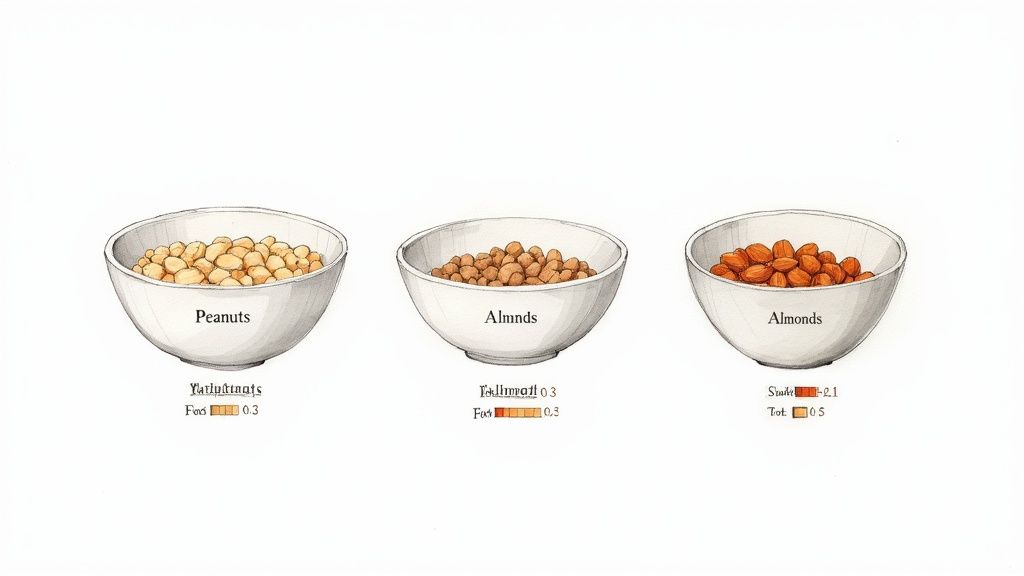
Grabbing a container of mixed nuts feels like a straightforward, healthy choice. But if you've ever looked closely at the can, you'll notice no two blends are quite the same. The mixed nuts nutritional value can change quite a bit depending on what’s inside, turning your go-to snack into a totally different experience from one brand to another.
Think of it like building a sports team. A mix that’s heavy on peanuts (which, fun fact, are technically legumes) is going to be your protein powerhouse. On the flip side, a blend loaded with walnuts and almonds will bring more healthy fats, like omega-3s, and vitamin E to the table. Neither one is "bad"—they just play different roles.
Once you know this, you can be a smarter shopper. Looking for a post-workout snack to help with muscle repair? A peanut-heavy mix might be a great choice. If you’re more focused on getting those good fats for heart and brain health, keep an eye out for a bag that leads with walnuts or macadamia nuts.
The Impact of Nut Composition
Let’s get into how the main nut in the mix changes the entire nutritional game. The ingredient list on the back of the package is your best friend here, as it always lists what's most plentiful first.
- Peanut-Dominant Mixes: These are usually the most budget-friendly and tend to pack the biggest protein punch. Peanuts deliver around 25 grams of protein per 100g, making them a fantastic choice for keeping you full.
- Almond-Heavy Blends: Almonds are true nutritional all-stars, loaded with vitamin E, magnesium, and fiber. They bring a satisfying crunch and a slightly lower protein count than peanuts but are a brilliant source of monounsaturated fats.
- Walnut or Pecan-Rich Varieties: These nuts are champions of polyunsaturated fats, especially the brain-boosting omega-3s found in walnuts. That makes any mix leading with them a great choice for supporting your cognitive and cardiovascular health.
And the differences don’t stop there. Some "deluxe" mixes might toss in Brazil nuts, which are an incredible source of selenium, or creamy cashews, which are rich in copper. This is really the beauty of mixed nuts—you get a little bit of everything in one scoop.
How They're Prepared Matters, Too
It's not just about what nuts are in the mix, but also how they're treated before they get to you. A quick scan of the label tells you a whole lot.
The difference between "dry-roasted" and "oil-roasted" might seem minor, but it can quietly add extra calories and fat to your snack. In the same way, salted versions can make your daily sodium intake creep up without you even realizing it.
Choosing what’s right for you just comes down to your personal health goals. Unsalted, raw, or dry-roasted nuts are the purest option, giving you all the good stuff with none of the extras. Oil-roasted and salted nuts are undeniably delicious, but it's helpful to be mindful of what they're adding to the equation.
This is where a casual tracking tool like Munchlog.ai is a game-changer. Simply telling it, "I had a handful of salted oil-roasted mixed nuts," gives the AI enough info to account for those small but significant differences. It’s not about obsessing over every little detail—it's about effortlessly building a clearer picture of what you're eating, one handful at a time.
Understanding Good Fats and Heart Health
You’ve probably heard people talk about "good fats," especially when nuts come up. But what does that really mean? It’s actually pretty straightforward. The fats packed into mixed nuts are mostly the monounsaturated and polyunsaturated kinds—the exact types that benefit your heart.
Think of them as the helpful fats. Unlike the saturated fats you find in a lot of processed snacks, these unsaturated fats are key players in supporting your cardiovascular system. They help keep cholesterol levels in a healthy range and can even reduce inflammation, which is a huge win for your long-term wellness.
This is a huge part of the mixed nuts nutritional value picture. These healthy fats are a big reason why nuts are such a powerhouse snack. Not only do they provide a steady source of energy, but they also help you feel full and satisfied long after you've finished eating.
Why Feeling Full Matters
That feeling of fullness—satiety, if you want to get technical—is a real game-changer. When a snack actually keeps you satisfied, you're much less likely to go hunting for something sugary an hour later. This is where nuts really deliver. The triple-threat combo of healthy fats, protein, and fiber works together to put the brakes on hunger.
This isn’t just an idea; we’ve got some interesting science to back it up. A 2023 UCLA study, for example, found something pretty cool. People on a calorie-conscious diet who ate 1.5 ounces of mixed nuts every day reported feeling more satisfied. They also saw a significant drop in their diastolic blood pressure compared to a group that ate pretzels instead. Even better, the nut-eaters were more successful at keeping their weight steady after the diet ended. You can read more about these heart-healthy findings on UCLA's health blog.
The takeaway is simple: choosing a snack like mixed nuts isn't about restriction. It's about choosing foods that work with your body, keeping you energized and preventing the blood sugar crashes that lead to mindless snacking.
Making Tracking an Insightful Habit
Once you understand these benefits, food tracking starts to feel different. It stops being a chore focused on just counting calories and becomes more of a tool for discovery. When you log that handful of nuts, you’re not just entering numbers. You’re recognizing a choice that supports your heart and helps you feel your best.
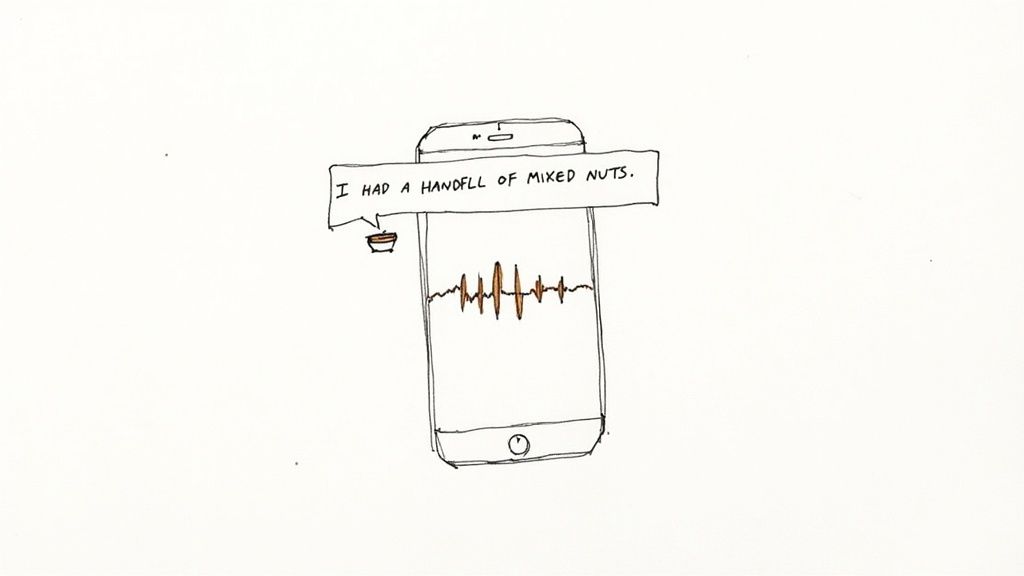
This is where a simple tool like Munchlog.ai can make a real difference. A quick voice entry like, "I had a small handful of mixed nuts," captures that healthy choice without any hassle. It helps you build a natural awareness of how different foods affect your body, turning nutrition into an interesting part of your day instead of a stressful task. You begin to connect the dots between what you eat and how you feel, making smarter choices almost second nature.
Mastering Portion Control Without the Stress
Mixed nuts are a fantastic snack, but they're also calorie-dense. We've all been there: you grab a handful, and before you know it, you’re staring at the bottom of the container wondering where it all went.
This is where getting a handle on portion control—without driving yourself crazy—can make all the difference.
The goal isn't to get obsessive and whip out a food scale for every single snack. It’s about building smarter, more mindful habits that let you enjoy the foods you love while still feeling good. A standard one-ounce serving gives you all the benefits without tipping the calorie scales.
Quick and Easy Portioning Hacks
Forget the scale for a minute. You can get a surprisingly accurate estimate of a single serving using things you already have on hand. These visual cues are perfect for when you're at your desk, on the go, or just want a quick, no-fuss snack.
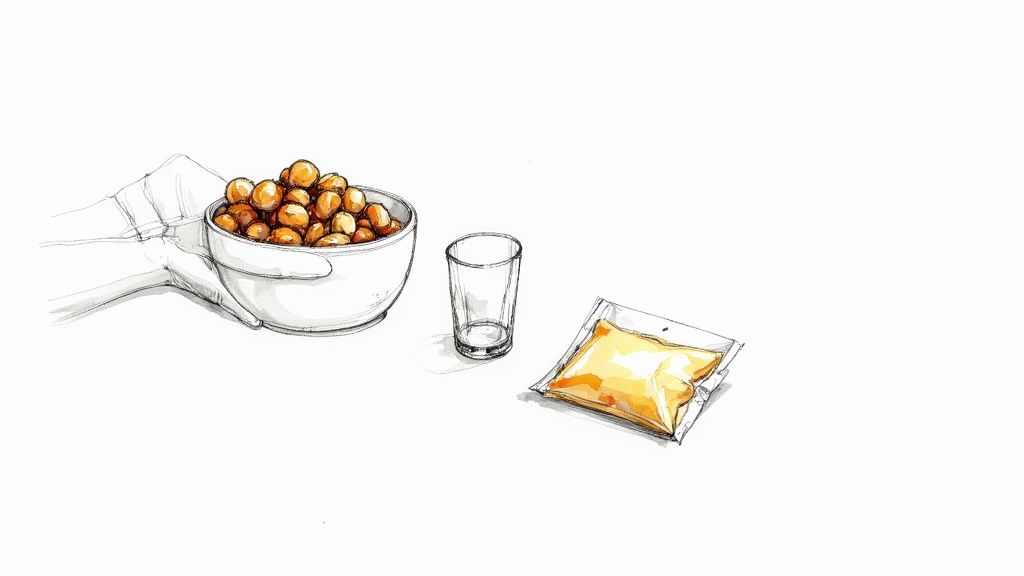
- The Cupped Handful: This is the easiest trick in the book. The amount of nuts that fits comfortably in the palm of your hand is roughly one ounce. Simple.
- The Shot Glass: Have one in the back of a kitchen cabinet? A standard 1.5-ounce shot glass filled with nuts is a little more than a single serving, making it a brilliant visual guide.
- The Bottle Cap: This one’s great for smaller nuts like peanuts or chopped almonds. A standard plastic soda bottle cap filled twice is just about one ounce.
Portioning isn't about restriction; it's about awareness. It’s the simple act of checking in with yourself to ensure your snack is fueling your day effectively, not derailing it.
Smart Snacking Strategies
Beyond just eyeballing your portion, a few simple strategies can help you build healthier habits around snacking on nuts. These small adjustments can have a huge impact over time.
For anyone who wants a bit more precision without the daily hassle, learning how to weigh food for weight loss just once can be a game-changer. It helps train your eyes to what a true serving looks like, so you can trust your visual estimates later on.
Another great strategy is to pre-portion your nuts into small bags or containers as soon as you get them home. This completely removes the guesswork. When you want a snack, just grab a bag and you’re set.
You can also try pairing your nuts with something less calorie-dense, like a crunchy apple or a small cup of Greek yogurt. This adds volume and fiber, creating a more balanced and satisfying snack that keeps you feeling full way longer.
How to Log Your Snack in Seconds with Your Voice
You’ve mastered portion control and enjoyed your perfect handful of mixed nuts. Now comes the part everyone dreads: logging it.
Traditionally, this means pulling out your phone, opening a clunky calorie-counting app, and getting to work. You'd have to type in "mixed nuts," sift through a dozen generic entries, guess at the right one, and manually adjust the details. It's enough to make a mindful snack feel like a chore.
This friction is exactly why so many of us get fed up and ditch tracking altogether. It just feels like work. But what if logging was as easy as talking?
That's the entire idea behind Munchlog.ai. Instead of typing, you just speak. Imagine simply saying, "Hey Munchlog, I had a small handful of salted mixed nuts." That’s it. You’re done. The AI instantly gets it, logging your snack with the right nutritional estimates without you having to lift another finger.
The Old Way vs. Munchlog.ai Voice Logging
It’s easy to see this as just a neat feature, but it’s a total shift in how we think about food tracking. It takes logging from an active, time-consuming task to a background habit that takes zero effort. For anyone interested in how this technology works across different devices, looking into some of the best speech-to-text apps for Windows shows just how powerful voice commands have become.
Let's break down the difference between the old, manual way and the new, conversational way.
| Action | Manual Logging | Munchlog.ai Voice Logging |
|---|---|---|
| Step 1 | Unlock phone, find and open app | Open app and tap record button |
| Step 2 | Type "mixed nuts" in a search bar | Say what you ate |
| Step 3 | Scroll through dozens of options | Let the AI handle the details |
| Step 4 | Select serving size and save entry | You’re done! |
This isn’t just about saving a few seconds; it's about removing the mental barrier to tracking.
When logging is this easy, it stops feeling like a chore and starts supporting your life. It finally makes using a simple food diary app a sustainable habit for building long-term awareness and reaching your health goals.
Your Mixed Nuts Questions Answered
Still have a few questions about mixed nuts? Let's clear them up.
We’ve covered the numbers, but the real trick is figuring out how mixed nuts fit into your life. From salted versus unsalted to their role in weight management, here are some straight-up answers to the most common questions.
Are Salted Mixed Nuts Unhealthy?
Not necessarily, but it’s something to be mindful of. The big difference is, of course, the added sodium. Too much sodium over time can contribute to issues like high blood pressure.
If you enjoy salted nuts every now and then, don’t sweat it. But if they're your daily go-to snack, switching to unsalted or lightly salted is a smart move for your overall health. This is where a little casual tracking comes in handy—you can see how much sodium you're actually getting without obsessing over it.
Think of it like this: Sticking to unsalted nuts most of the time is like taking the scenic route for your health—it’s a smoother, more beneficial journey in the long run.
Which Nut Is the Healthiest in a Mix?
This feels like a trick question, because it is! There's no single "best" nut. The real magic of a good mix is that every nut brings something different and valuable to the table.
- Almonds are your go-to for Vitamin E and a solid dose of fiber.
- Walnuts are packed with plant-based omega-3s, which are fantastic for your brain and heart.
- Brazil nuts are absolute selenium powerhouses—you only need one or two to hit your daily goal.
- Peanuts (technically a legume, but we'll let it slide) give you a great protein kick.
So instead of trying to find one hero nut, embrace the variety. A diverse mix is your ticket to a wider range of vitamins, minerals, and healthy fats in every single handful.
Can I Eat Mixed Nuts While Trying to Lose Weight?
Absolutely! In fact, they can be an incredible ally for managing your weight. The secret, as we've already covered, is all about the portion size.
Because nuts are so dense with satisfying fats, protein, and fiber, a small serving goes a long way. It can crush hunger pangs and keep you from reaching for junk food later. A standard one-ounce serving—about what fits in a small, cupped handful—gives you all the benefits without blowing your calorie budget. Casually logging a snack like this helps you stay mindful, making it easy to enjoy them daily while still hitting your goals.
Ready to make tracking this simple? With Munchlog.ai, you can log your snacks and meals just by talking. No typing, no searching—just effortless nutritional awareness. Try it today and see how easy staying mindful can be.